Moving Kitchen Appliances: Dubai Prep, Packing and Setup Guide
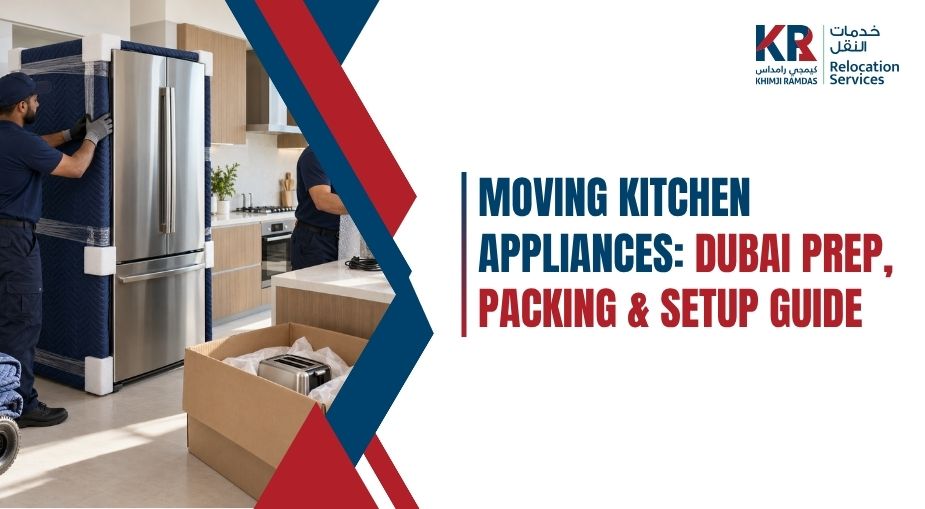
Moving kitchen appliances in Dubai requires more than wrapping an item and carrying it to the truck. Refrigerators, washing machines, dishwashers, ovens and small appliances each have different preparation, protection and reconnection considerations.
This guide explains how to clean, dry, disconnect, secure and protect appliances before a local move, what should be handled by a qualified technician, and how to organise your kitchen so moving day is safer and more predictable.
It also includes a room-by-room checklist and practical guidance for working with Khimji Ramdas Relocation Services for local moving support.
Moving Kitchen Appliances in Dubai: Start With a Safe Plan
A successful appliance move begins before the movers arrive. The main risks usually come from rushed disconnection, hidden water inside hoses, unsecured internal parts, insufficient drying or trying to move an appliance through a doorway without measuring the route first.
In Dubai, planning also matters because apartment access, lift bookings, parking arrangements, building protection rules and delivery timings can affect how the move is carried out. Confirming these details early helps prevent an appliance from being ready at home while the moving team cannot safely access the building.
Decide What You Are Moving
For households moving kitchen appliances, start with a complete list of appliances, not only the large items. Include the refrigerator, freezer, washing machine, tumble dryer, dishwasher, built-in or freestanding oven, microwave, coffee machine, air fryer, blender and other valuable or fragile equipment.
When moving kitchen appliances, decide whether each item is moving, being sold, donated or replaced. Moving a low-value appliance may not be worthwhile if it has a known fault, excessive wear or a power requirement that will not suit the new home.
Conversely, a premium coffee machine or built-in appliance may need specialist preparation even though it is relatively small.
Record the make, model and visible condition of larger appliances. Taking photographs of corners, control panels, doors and existing marks can help distinguish pre-existing damage from any issue noticed after delivery.
Measure the Appliance Route, Not Only the Appliance
While moving kitchen appliances, measure the appliance width, height and depth, including handles, doors, hinges, feet and any protruding controls. Then check the route from the kitchen to the building exit and from the vehicle to the new kitchen.
Pay particular attention to:
- Kitchen doorways, corridors and tight turns
- Measure lift doors, lift interiors, staircases and landing spaces before moving kitchen appliances.
- Thresholds, kerbs and changes in floor level
- The final position, including ventilation gaps and door-opening clearance
A refrigerator may fit through a doorway when upright but not when tilted or protected with moving blankets.
A dishwasher may pass through the kitchen entrance but fail at a narrow corridor because its depth has been underestimated. Measuring early gives you time to remove a door where appropriate, change the route or obtain professional advice.
Confirm Building and Utility Arrangements
While moving kitchen appliances, ask both buildings about move-in and move-out procedures. Some residential communities require advance booking for service lifts, loading bays or protective floor coverings. Others may restrict the time of day when large items can be moved.
Do not assume that electricity, water or gas will be available in the same condition at the new property.
Check the outlet position, plumbing connection, drainage point and ventilation requirements before the appliance arrives. A new kitchen layout may require an electrician, plumber or gas technician rather than a moving crew.
Before moving kitchen appliances, Khimji Ramdas Relocation Services can support the physical local moving process, including the careful handling and transport of household items where arranged. Disconnection, reconnection, installation and testing should be confirmed separately and assigned to an appropriately qualified professional when required.

Tell us about your move and get a personalized quote based on your requirements.
How to Prepare Each Kitchen Appliance
Different appliances need different preparation. The safest approach is to follow the manufacturer’s instructions first and use general moving guidance only as a supplement. If the manual is unavailable, search for the exact model using the manufacturer’s official support information rather than relying on a similar-looking appliance.
Refrigerators and Freezers
To reduce risk when moving kitchen appliances, remove food, ice and loose shelves or drawers. Dispose of items that cannot travel safely, place removable parts in separate padded boxes and label them clearly.
Do not leave glass shelves loose inside the cabinet; vibration can cause them to shift and break.
Defrost the freezer if ice is present. Allow enough time for melting water to drain, then wipe the interior, seals, drawers and drip areas. The refrigerator should be completely dry before the doors are closed for transport. Moisture trapped inside can create odours and may affect packaging.
As part of moving kitchen appliances safely, if the appliance has a water dispenser or ice maker, the water supply must be shut off and the line drained according to the manufacturer’s instructions.
Disconnecting a plumbed appliance may require a qualified plumber, particularly if the shut-off valve is inaccessible, seized or leaking.
To reduce risk when moving kitchen appliances, protect the doors without sealing them tightly in a way that prevents ventilation during storage. Use suitable straps or protective materials as directed, but do not overtighten them against the door seals.
Keep the refrigerator upright whenever the manufacturer’s instructions require it. If it must be tilted for access, follow the specific guidance for that model.
After moving, the answer to “after moving fridge how long to wait” depends on the appliance design, the position in which it travelled and the manufacturer’s instructions.
Some refrigerators may need time to settle before being powered on, especially if they were tilted. Do not rely on a universal waiting period; check the manual or ask the manufacturer or a qualified appliance technician.
Washing Machines and Tumble Dryers
To reduce risk when moving kitchen appliances, run an appropriate cleaning or drain cycle before disconnecting the washing machine. Remove laundry, clean the detergent drawer and wipe the door seal.
Water can remain in the pump, drum and hoses even after a normal cycle, so use the manufacturer’s drain procedure.
Turn off the water supply and disconnect the inlet hoses. Drain them into a container and dry the connections. Secure the drain hose so it does not spill water inside the vehicle or against other furniture.
Washing machines often need transit bolts or another manufacturer-approved drum-locking system. These prevent the drum from moving excessively during transport. If the original bolts are missing, check the manual or contact the manufacturer before moving the machine. Do not improvise with unsuitable hardware.
For anyone moving kitchen appliances, a tumble dryer should be emptied, cleaned and disconnected from its power source.
If it is stacked with a washing machine, do not separate or move the pair without considering the manufacturer’s stacking kit and the equipment needed to handle the combined weight safely.
Dishwashers
Remove dishes, racks, cutlery baskets and loose filters. Clean food residue from the filter and allow the internal cavity to dry. Turn off the water supply, disconnect the inlet and drain hoses and keep the hose ends protected from leaks.
As part of moving kitchen appliances safely, integrated dishwashers are often fixed to the underside of a worktop or to adjoining cabinets.
Removing these fixings can affect the cabinetry or the appliance. If the dishwasher is hardwired, connected through inaccessible plumbing or integrated into a complex kitchen system, use a qualified technician.
Do not force the door closed against trapped racks or accessories. Wrap removable parts separately and label them so the appliance can be reassembled correctly at the destination.
Ovens, Hobs and Microwaves
For an electric freestanding oven, remove racks, trays and other loose parts. Clean grease and crumbs, then allow the interior to dry fully. Secure the door only in the manner recommended by the manufacturer, and protect control knobs and glass panels from impact.
Before moving kitchen appliances, built-in ovens and hobs require extra caution because they may be secured inside cabinetry, hardwired or connected to gas.
Do not disconnect a gas appliance, alter a gas connection or remove a hardwired electrical connection unless the work is performed by a suitably qualified technician. A mover can transport an appliance, but transport is not the same as disconnection or installation.
Microwaves should be cleaned, dried and moved with the glass turntable and roller ring removed. Protect the door and control panel, and keep the turntable in a padded box rather than inside the microwave cavity.
Small Kitchen Appliances
As part of moving kitchen appliances safely, small appliances are easier to move but are often damaged by loose accessories, tangled cables and pressure from heavier boxes. Clean and dry each item, remove detachable blades or bowls where possible, and wrap delicate surfaces individually.
Keep coffee machine water tanks empty. Empty air fryers, rice cookers and kettles completely, including concealed reservoirs where the instructions allow. Secure mixer attachments, blender blades and food-processor discs in labelled, padded packaging.
When moving kitchen appliances, use appropriately sized boxes rather than placing small appliances in a large carton with heavy cookware. Fill empty space with clean padding so items cannot shift, but avoid packing electrical appliances while they are still warm or damp.

Discuss your moving requirements with our team and find the right support for your move.
A Room-by-Room Moving Checklist
A room-by-room check is more reliable than trying to remember every task on moving day. Complete preparation in stages and mark each appliance only when it is clean, dry, disconnected where appropriate and ready for handling.
Kitchen Checklist
Before the moving team arrives, check that:
- Food, ice, water and loose contents have been removed
- When moving kitchen appliances, confirm that refrigerators, freezers, dishwashers and washing machines are dry inside.
- Shelves, racks, trays, drawers and glass parts are separately padded
- Hoses, cables and accessories are labelled and packed with the correct appliance
- Appliance doors, drawers and removable panels are protected according to the manual
- Gas, hardwired electrical and complex plumbing connections are handled by a qualified technician
- The new kitchen has been checked for dimensions, ventilation, outlets and service connections
Leave a clear working area around each large appliance. A crowded kitchen increases the risk of striking cabinets, dropping a shelf or damaging a worktop while an appliance is being moved.
Utility, Laundry and Storage Areas
Before moving kitchen appliances, check washing machines, tumble dryers, water filters, spare hoses, stacking kits and cleaning accessories. Drain water carefully and place hoses in a sealed bag or tray so residual water does not wet cartons or wooden furniture.
If appliances are stored in a utility cupboard or balcony enclosure, check for narrow access points and uneven thresholds. Do not assume an appliance can be carried through the same route used for everyday access; protective wrapping increases its overall dimensions.
Dining and Living Areas
Before moving kitchen appliances, although this article focuses on kitchen equipment, the moving route often crosses dining and living spaces. Remove rugs, ornaments, floor lamps and small tables from the path. Protect vulnerable flooring and identify furniture that must be moved before the appliance can leave the kitchen.
This is where broader furniture moving Dubai planning becomes important. Moving heavy furniture and appliances together requires an agreed sequence.
For example, a dining table may need to leave first to create turning space, while a tall cabinet may need to remain in place until the refrigerator has passed.
For anyone moving kitchen appliances, if you only need help with one item, ask about moving a single piece of furniture or a single appliance rather than assuming a full-home move is required.
The practical scope, access conditions and protection needs should be assessed before the booking is confirmed.
Bedrooms, Bathrooms and Final Checks
Keep bedrooms and bathrooms free from cartons, loose cables and cleaning products that could obstruct the route. Check that no appliance accessory has been placed in a different room for convenience; missing brackets and power cables can delay setup at the destination.
To reduce risk when moving kitchen appliances, before leaving the old property, photograph utility connections and the condition of walls, flooring and cabinets around built-in appliances. At the new property, inspect the delivery route and final position before the appliance is unpacked.
If the space is not ready, it may be safer to place the item in a suitable temporary position than to force it into an unsuitable connection point.
Our moving experts are here to assist you.
Move Day: Protecting Appliances and Your Home
To reduce risk when moving kitchen appliances, on moving day, preparation becomes coordination. Large appliances are heavy, awkward and often have a high centre of gravity. Correct lifting, route control and surface protection matter as much as the wrapping itself.
Use the Right Protection
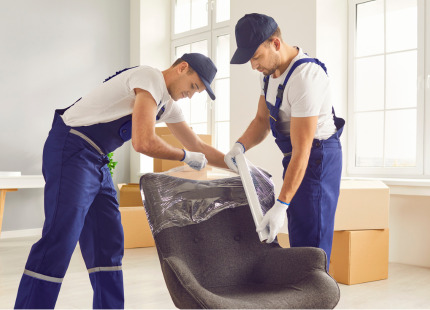
A professional furniture moving service may use moving blankets, corner protection, stretch wrap, straps, dollies or other equipment suited to the item and route. Protection should prevent scuffs and impact without trapping moisture or placing pressure on fragile controls, doors or glass.
Do not wrap a damp refrigerator, washing machine or dishwasher tightly in plastic. Moisture trapped under wrapping can transfer to flooring, cabinetry or the appliance surface. Use dry protection and keep the item covered only as long as necessary for the move and any agreed storage period.
While moving kitchen appliances, appliance surfaces should not be treated like ordinary furniture. Stainless steel can scratch when abrasive materials are used, and glossy panels can mark under rough straps.
Glass doors and control panels need particular care because a small impact may make the appliance unsafe to use.
Move Heavy Appliances in a Controlled Sequence
Before moving kitchen appliances, clear the route before lifting begins. Assign one person to guide the path and identify door frames, corners, thresholds and overhead obstructions. Never place hands beneath an appliance or attempt to catch it if it begins to tip.
The safest handling method depends on the appliance weight, dimensions, centre of gravity and access conditions. Avoid dragging appliances across tile, stone or timber flooring. Use suitable equipment and enough trained personnel for the item rather than relying on improvised lifting.
To reduce risk when moving kitchen appliances, if the route is too narrow, stop and reassess. Removing a door, changing the angle of approach or arranging specialist assistance may be safer than forcing the appliance through.
A furniture moving company in Dubai should be given accurate information about dimensions, stairs, lifts, parking and access restrictions before the move.
Handover at the New Home
Before placing an appliance, confirm the intended position and check that the floor is level and clear. Leave the ventilation, drainage, electrical and plumbing clearances specified by the manufacturer. Do not connect an appliance simply because the plug or hose reaches the outlet.
Before moving kitchen appliances, at delivery, inspect visible surfaces and accessories. Keep manuals, brackets and connection parts together. Take photographs if you notice a concern, and record it promptly while the delivery condition is clear.
Khimji Ramdas Relocation Services can be a practical option when you need organised local moving support for household contents and large items in Dubai.
When requesting a quotation or booking, explain which appliances are included, whether they are freestanding or built-in, the building access conditions and whether a qualified technician is separately required. This helps ensure the moving plan reflects the real job rather than a generic furniture moving service assumption.
Wrapping Up
Moving kitchen appliances safely depends on preparation, not speed. Clean and dry each appliance, remove and protect loose parts, secure drums and doors as instructed, measure the route, and treat water, gas and hardwired electrical connections with appropriate caution.
The most important distinction is between moving and installation. A moving team can transport an appliance, but disconnection, reconnection, testing or gas-related work may require a qualified technician and should never be improvised.
Manufacturer instructions should guide model-specific steps, including refrigerator positioning and the correct waiting time before powering it on.
For households moving kitchen appliances, a clear checklist also reduces disruption in Dubai apartments, where lift access, parking, building rules and narrow routes can affect the move.
Whether you are planning a complete household relocation, arranging furniture moving Dubai support or moving a single piece of furniture or appliance, provide accurate details before the booking.
Khimji Ramdas Relocation Services can help coordinate local moving requirements around your household contents and access conditions. With the appliances prepared properly and the technical tasks assigned to the right specialists, you can make the move safer and start using your new kitchen with fewer avoidable delays.

FAQs - Moving Kitchen Appliances
How should I prepare a refrigerator before Moving Kitchen Appliances in Dubai?
Empty, defrost, clean and dry the refrigerator. Remove and pad shelves, disconnect plumbed water safely, and follow the manufacturer’s guidance on upright transport and when to power it on after delivery.
After moving a fridge, how long should I wait before turning it on?
While moving kitchen appliances, the correct waiting time varies by model and how the refrigerator was transported. Check the manufacturer’s instructions or ask a qualified appliance technician rather than relying on one universal waiting period.
Can movers disconnect a gas oven or a hardwired kitchen appliance?
Do not assume a moving crew can perform technical disconnection. Gas and hardwired appliances should be handled by suitably qualified technicians, while movers can transport them once they are safely prepared.
How do I prepare a washing machine for Moving Kitchen Appliances?
Run a suitable drain or cleaning cycle, shut off water, disconnect and drain hoses, clean the seal, and fit manufacturer-approved transit bolts or drum restraints before transport.
How should I wrap furniture and large appliances for a Dubai move?
Before moving kitchen appliances, use clean, dry moving blankets and suitable corner protection, keeping pressure away from controls, glass and door seals. Do not tightly wrap damp appliances, and use trained handling equipment for heavy items.
Can I book a furniture moving service for only one appliance or piece of furniture?
A single-item move may be possible, subject to access, dimensions, weight and handling requirements. Provide accurate details so the furniture moving company can assess equipment, protection and staffing needs.
How can Khimji Ramdas Relocation Services help with local appliance moves in Dubai?
For households moving kitchen appliances, Khimji Ramdas Relocation Services can support the local transport and handling of household items, subject to the confirmed scope. Technical disconnection, installation and government or utility approvals remain separate responsibilities.
Explore Our Most Relevant Articles
With a dedicated single point of contact offering comprehensive, tailored solutions, streamlined processes, and a network of suppliers, we ensure a superior relocation experience. Our commitment to excellence ensures that every aspect of the relocation process is efficiently managed, delivering satisfaction to our clients.

Moving from Abu Dhabi to Dubai: Timeline, Access and Costs Guide
Plan your Abu Dhabi to Dubai move with practical timelines, building access tips, packing guidance and cost factors from Khimji Ramdas Relocation Services.

Everything You Need to Know Before Moving Single Item Overseas
Moving single item overseas from the UAE? Learn how packing, dimensions, customs, insurance and transport methods affect feasibility, delivery and cost.

How to Choose Cross Country Piano Movers for UAE to UK Shipping
Compare cross country piano movers for UAE to UK shipping. Learn about safe packing, access, customs, insurance, piano moving cost and delivery planning.