Why Businesses Need Office Relocation Consultant for Big Moves
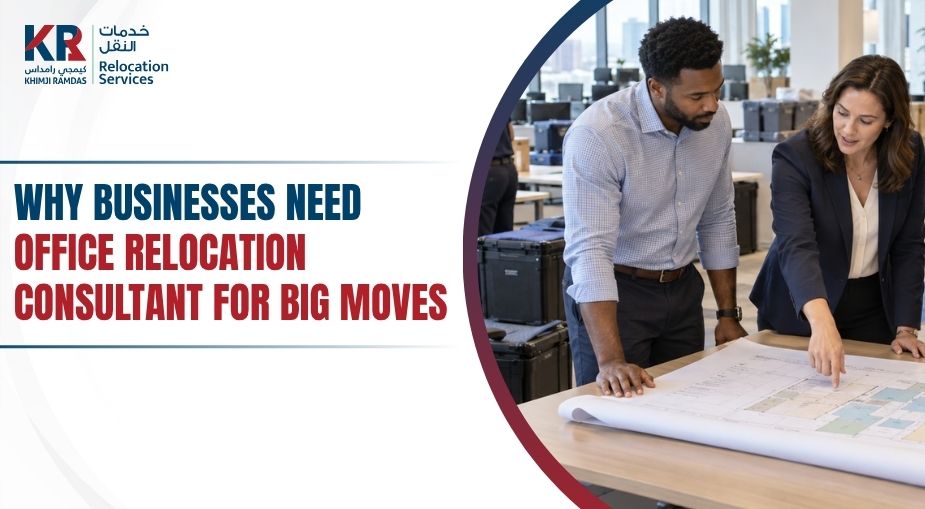
Relocation consultant support can make the difference between an office move that disrupts operations and one that allows your business to keep serving customers with confidence.
A large move involves far more than transporting desks: it requires coordinated decisions about people, technology, furniture, suppliers, access, security and the sequence of work.
When several teams, buildings or countries are involved, informal coordination quickly becomes a business risk. This guide explains what a relocation consultant does, how professional relocation services protect continuity, and why businesses often benefit from involving an experienced office moving company early in the planning process.
Why a Relocation Consultant Matters for a Complex Office Move
An office relocation consultant provides a central point of coordination for the many workstreams that must come together before, during and after a move. Rather than treating the project as a simple transport exercise, the consultant helps turn a business requirement into a workable relocation plan.
This is especially valuable when the move includes multiple departments, a tight handover between buildings, specialist equipment, remote sites, international destinations or employees who also need support with their own relocation.
The Office Move Is a Business Change Project
This point is easier to manage with a relocation consultant involved. A business may appoint separate suppliers for furniture, IT, removals, building access, disposal, storage, cleaning and installation. Each supplier may perform its own task competently, but the project can still fail if the tasks are not sequenced properly.
For example, movers cannot place workstations efficiently if the floor plan is still changing. IT teams cannot complete testing if equipment arrives without an agreed inventory. Employees cannot work effectively on the first day if access cards, meeting rooms or essential supplies have been overlooked.
A relocation consultant connects these activities. The consultant helps define who is responsible for each decision, what must happen first, and which issues require escalation before they affect the move date.
The Value of One Coordinating View
One of the practical benefits of professional coordination is visibility. Business leaders can see the relationship between the move plan and operational priorities rather than managing isolated supplier updates.
A useful coordination plan normally brings together:
- The scope of the move, including people, equipment, furniture, records and storage requirements.
- The sequence of packing, disconnection, transport, installation, testing and handover.
- Responsibilities for internal teams, building management, vendors and the office moving company.
- Risks, dependencies, decisions still required and actions that could affect continuity.
When working with a relocation consultant, keep this detail in view: At Khimji Ramdas Relocation Services, this type of joined-up planning is relevant to businesses considering office moving services, particularly when the move involves several stakeholders rather than one straightforward collection and delivery.

Tell us about your move and get a personalized quote based on your requirements.
How Professional Relocation Services Build a Practical Move Plan
The quality of an office move is often determined before the first carton is packed. A professional relocation plan creates a realistic sequence, identifies dependencies and gives the business enough time to make decisions without relying on last-minute improvisation.
When appointing a relocation consultant, consider this point: The right approach is not necessarily the longest plan. It is the plan that reflects the organisation’s operating requirements, building constraints and tolerance for disruption.
Start With Scope, Surveys and Objectives
Planning should begin with a clear understanding of what is moving, what is being replaced, what is going into storage and what will be disposed of or recycled through approved arrangements. This may include workstations, chairs, meeting-room furniture, documents, specialist equipment, pantry contents, artwork and personal effects.
A relocation consultant should connect this with the wider move plan. A physical survey can reveal practical issues that are easy to miss in a spreadsheet.
Lift dimensions, loading-bay restrictions, floor access, security procedures, parking limitations and building operating hours may all affect the schedule. A destination survey can also identify whether furniture will fit the intended layout and whether installation work must happen before other deliveries.
A relocation consultant can help frame this decision: The business should also define success. For one organisation, success may mean opening the new office on a Monday with core teams fully operational.
For another, it may mean moving departments in phases while customer support, trading, clinical, hospitality or production functions continue without interruption.
Build the Timeline Around Dependencies
A move timeline should show more than a collection date and a delivery date. It should account for decisions and dependencies such as final space planning, supplier lead times, building approvals, employee communication, technology preparation, packing, labelling, transport, installation and testing.
Some activities can run in parallel; others cannot. Furniture installation may need to precede IT deployment. Network readiness may need to be confirmed before teams are moved. Confidential files may require controlled handling and a separate chain of responsibility.
A relocation consultant helps challenge unrealistic assumptions. A requested move weekend may sound achievable until the plan accounts for building access, multiple floors, specialist items, protection of common areas and post-move testing. Identifying that issue early gives the business options, rather than leaving it to the final day.
Use Phased Moves When They Reduce Risk
A single move can be efficient, but it is not always the safest choice. Phased relocation may suit organisations with several departments, multiple sites or functions that cannot stop at the same time.
A relocation consultant can help assign ownership for this detail. A phased approach can allow one team to occupy the new space while another remains operational at the existing location.
It may also make sense to move non-critical functions first, test the new environment and then transfer teams with more demanding operational requirements.
This is where a relocation consultant can add structure. The trade-off is that phased moves can require duplicate arrangements for a period, including access, connectivity, furniture or storage. The decision should therefore be based on business continuity and total operational complexity, not on the number of transport days alone.
Keeping Furniture, IT and Vendors Aligned
Furniture, technology and third-party suppliers are closely connected during an office move. Treating them as separate workstreams creates avoidable delays, because the condition and location of one asset often determines when another team can begin.
A coordinated move plan gives every supplier a shared sequence and a clear handover point. This is one of the areas where an experienced office moving company can add practical value beyond loading and transport.
Furniture Requires More Than Transport
When working with a relocation consultant, keep this detail in view: Furniture may need to be dismantled, labelled, protected, transported, reassembled and positioned according to the approved layout. Some items may not be suitable for the new premises, while others may require adaptation, storage or replacement.
The inventory should distinguish between items that are ready to move and items that require specialist attention. Large conference tables, glass panels, secure cabinets, modular workstations and delicate fixtures may need different handling or access arrangements.
A common mistake is to finalise the furniture plan after the move schedule has already been set. If the layout changes late, labelling, installation and employee seating assignments may all need to be revised. Confirming the destination plan early reduces rework and makes the first-day setup more predictable.
Coordinate IT Without Taking Over IT Decisions
A relocation consultant can coordinate this point early. The relocation team does not replace the organisation’s IT specialists. Instead, it helps coordinate the physical move around their technical requirements.
This can include agreed times for equipment shutdown, packing and labelling standards, secure transport, delivery to specific rooms, installation access and testing windows.
A relocation consultant should connect this with the wider move plan. Servers, network equipment, desktop devices, monitors, printers and specialist hardware may each require different handling instructions.
Some organisations may also need a temporary operating arrangement while the new office is being prepared. The appropriate process depends on the equipment, security requirements and internal policies of the business.
The key question is not simply whether the equipment arrived. It is whether the right equipment reached the right destination, in the right condition, with enough time for the responsible team to test it before employees return.
Manage Vendors Through a Shared Plan
Office moves commonly involve landlords, facilities teams, telecommunications providers, furniture suppliers, cleaners, security personnel, disposal contractors and building management. Without a shared plan, each vendor may work to a different definition of completion.
A relocation consultant can help establish practical handover points. For example, the destination may need to be clean and accessible before furniture installation, while IT may need completed furniture and power access before deployment. Building management may also require advance information about vehicles, loading areas and working hours.
With support from a relocation consultant, account for this requirement: Khimji Ramdas Relocation Services can support the coordination of the moving workstream while the business retains control of its technical, legal, security and supplier decisions.
That division of responsibility keeps the project realistic and avoids suggesting that one provider controls approvals or outcomes managed by other parties.

Discuss your moving requirements with our team and find the right support for your move.
Protecting Business Continuity and Managing Move Risk
The purpose of professional office relocation management is not to remove every possible problem. No complex move is entirely risk-free. The objective is to identify material risks early, assign ownership and create practical responses before they become operational incidents.
Business continuity should be considered alongside the physical move, not after it. The safest plan reflects which services must continue, which functions can work remotely and which activities can tolerate a short interruption.
Identify the Risks That Could Affect Operations
With support from a relocation consultant, account for this requirement: Risk assessment should be specific to the organisation.
Common areas for consideration include access delays, incomplete packing, damaged or missing assets, unclear labelling, changes to floor plans, late supplier work, limited loading access, unavailable lifts, technology downtime and employees arriving before the workspace is ready.
Confidential records and valuable equipment may require additional controls. The business should establish who can access them, how they are identified, how they are handed over and what records are maintained. Requirements can vary by organisation, industry and asset type, so internal policies should guide the final process.
This is where a relocation consultant can add structure. A useful risk register does not need to be complicated. It should identify the issue, its potential effect, the person responsible, the planned mitigation and the point at which the issue must be escalated.
Plan for the First Working Day
A relocation consultant can coordinate this point early. Many move plans focus heavily on collection and delivery but give too little attention to the first day in the new office.
A successful handover should consider whether employees can enter the building, find their work areas, access essential systems, locate meeting rooms and obtain basic support when something is not as expected.
A short post-move support period can help resolve misplaced items, furniture adjustments, access questions and outstanding installation tasks. The exact arrangement depends on the project scope and the business’s needs, but it should be discussed before the move rather than assumed on the day.
It is also sensible to define what “operational” means. A call centre, engineering team, professional-services office and hospitality operation may have very different minimum requirements for opening successfully.
Protect Continuity Through Decision Gates
With a relocation consultant, this point can be coordinated early: Decision gates are useful points at which the project team confirms that the next stage can proceed.
Examples include approval of the final inventory, confirmation of destination readiness, sign-off on the furniture layout, completion of packing and confirmation that technology testing can begin.
If a gate is not met, the business can decide whether to delay, change the sequence, move only part of the scope or use a temporary arrangement. This is more controlled than discovering a critical dependency during loading or on the first morning in the new premises.
Our moving experts are here to assist you.
Communicating With Employees and Supporting Corporate Relocation
Include this point when briefing a relocation consultant. Employees experience an office move as a change to their daily routine, not simply as a logistics project.
Clear communication reduces uncertainty, helps people prepare their personal work areas and makes it easier for the business to identify concerns before they affect the schedule.
For organisations moving employees across borders or between cities, office relocation may also sit alongside corporate relocation and individual household moves. Those needs should be connected where appropriate, while still being planned as distinct workstreams.
Give Employees Useful Information at the Right Time
Employees generally need practical information rather than broad assurances. Communication may cover the new address, expected move dates, packing responsibilities, labelling rules, access arrangements, parking or transport information, changes to seating and the process for reporting missing or damaged items.
A relocation consultant can help frame this decision: Messages should be timed around decisions that employees need to act on. Sending detailed instructions before the dates and floor plans are stable can create confusion, while communicating too late leaves people no time to prepare.
Department leads can also help identify business-critical materials, customer commitments, accessibility requirements and team-specific equipment. Their input often reveals issues that a central project team may not see from an overall inventory.
Connect Office and Employee Relocation Carefully
This point is easier to manage with a relocation consultant involved. An employee may be moving office, home or country at the same time.
This can involve household goods, temporary accommodation, settling-in assistance, documentation awareness and family-related practical concerns. The exact support required depends on the employee’s circumstances and the destination.
From a relocation consultant perspective, this detail matters: International movers and international relocators may also be involved when staff, equipment or household goods cross borders.
Customs, import rules, documentation and third-party decisions can vary by country and shipment type. These matters should be assessed case by case rather than treated as automatic or guaranteed outcomes.
Make Change Management Part of the Move
A move may alter reporting areas, collaboration zones, storage arrangements, visitor procedures or hybrid-working patterns. Employees are more likely to adapt when the business explains what is changing and why.
A relocation consultant can support the communication calendar and help translate operational milestones into employee-facing actions. The business remains responsible for internal policy, employment decisions and change-management messages, but coordinated timing reduces the risk of conflicting instructions.
Choosing an Office Moving Company for a Coordinated Relocation
Selecting an office moving company should involve more than comparing transport capacity or a single quotation. The most important question is whether the provider can understand the business objective, coordinate with other workstreams and communicate clearly when circumstances change.
When appointing a relocation consultant, consider this point: This is particularly important for large or sensitive moves where the business needs a managed process rather than a collection of disconnected tasks.
Questions to Ask Before Appointing a Provider
Ask how the provider approaches surveys, inventories, floor plans, labelling, packing, access constraints, furniture installation and post-move support. You should also understand who will manage day-to-day coordination and how project decisions, changes and risks will be recorded.
It is useful to discuss the provider’s experience with the type of move being considered. A local office move, a multi-site corporate relocation and an international business transfer may involve very different planning requirements. Service scope should be confirmed rather than assumed.
From a relocation consultant perspective, this detail matters: You should also clarify the boundaries between the moving team and your internal departments. For example, who prepares systems for shutdown, who authorises the movement of sensitive equipment, who approves the final floor plan and who confirms that the destination is ready?
Look for Coordination, Not Just Capacity
A large fleet or a long supplier list does not automatically create a successful move. Look for evidence of disciplined planning, clear reporting, realistic scheduling and the ability to work alongside facilities, IT, HR, building management and other vendors.
With a relocation consultant, this point can be coordinated early: A professional provider should be willing to discuss constraints and dependencies, not simply promise a fast move before understanding the site. Cautious advice is often more valuable than an optimistic commitment that has not been tested against the actual conditions.
Before appointing a provider, consider whether the proposed approach covers:
- A clear scope, inventory and site assessment.
- A practical schedule with responsibilities, dependencies and escalation routes.
- Appropriate coordination for furniture, IT, vendors, employees and continuity requirements.
When to Involve a Relocation Consultant
Early involvement is most useful when the move has multiple sites, a compressed deadline, complex building access, specialist assets, international elements, employee mobility requirements or limited internal project capacity. It allows the consultant to influence the sequence before key decisions become difficult or expensive to change.
Khimji Ramdas Relocation Services can discuss the requirements for an office move and help businesses assess the coordination needed across moving, storage, employee relocation and related workstreams.
The next step is to share the project context, intended locations, approximate scope, operational constraints and desired timing so that the discussion is grounded in the real move rather than assumptions.
Wrapping Up
A relocation consultant brings structure to the decisions that make an office move work: scope, sequencing, furniture, IT, vendors, employee communication, risk controls and business continuity. The value is not limited to transporting assets; it is the ability to connect those activities to the way your business operates.
When working with a relocation consultant, keep this detail in view: For a complex move, appointing an office moving company that can coordinate with internal teams and external suppliers may reduce uncertainty and give decision-makers better visibility.
Where employees are also changing cities or countries, employee relocation services can be planned alongside the office project without losing sight of individual needs.
If your organisation is preparing for a major move, speak with Khimji Ramdas Relocation Services about the project early. A practical conversation about locations, scope, dependencies and continuity requirements can help determine the right level of relocation services before the schedule becomes difficult to change.


FAQs - Relocation Consultant
What does a relocation consultant do during an office move?
A relocation consultant coordinates the move plan, suppliers, timelines, furniture, IT dependencies, employee communication and risk controls so the business can manage change with less disruption.
Why should a business use an office moving company for a large relocation?
A professional office moving company can manage surveys, packing, transport, furniture installation and handover while coordinating with facilities, IT, building management and other project stakeholders.
How early should a business appoint a relocation consultant?
Earlier is generally better, especially for multi-site, international or time-sensitive moves. Early involvement allows scope, access requirements, dependencies and continuity measures to be assessed before plans become fixed.
How can professional relocation services protect business continuity?
They protect continuity by sequencing work around critical operations, using phased moves where appropriate, identifying risks, planning technology handovers and defining what must be ready for the first working day.
Can a relocation consultant coordinate furniture, IT and external vendors?
Yes. The consultant can align the physical move with furniture suppliers, IT teams, facilities, building management and other vendors, while each specialist retains responsibility for its own technical or operational decisions.
When do corporate relocation and employee relocation services need to be included?
They may be needed when employees are moving between cities or countries alongside the office project. Support can be planned around household goods, settling-in needs and destination requirements, which vary by situation.
Can international movers support an office move involving more than one country?
International movers can help coordinate the movement of business assets and related logistics, but customs, documentation and import requirements vary by country, authority and shipment type and must be assessed individually.
Explore Our Most Relevant Articles
With a dedicated single point of contact offering comprehensive, tailored solutions, streamlined processes, and a network of suppliers, we ensure a superior relocation experience. Our commitment to excellence ensures that every aspect of the relocation process is efficiently managed, delivering satisfaction to our clients.

High End Movers: What Makes a Luxury Relocation Truly Different?
Learn what sets high end movers apart, from specialist packing and security to fine art, vehicles, storage and personalised luxury relocation planning.
Smooth Moving Checklist: 15 Steps UAE Families Often Forget
Use this smooth moving checklist for UAE families to plan packing, access, utilities, valuables, address changes and professional local moving support.

Moving Overseas Checklist for UAE Households Bound for the UK
Use this moving overseas checklist for a UAE to UK relocation, covering packing, customs, pets, vehicles, shipping, costs, documents and delivery planning.