FCL vs LCL Shipping: Which Is Right for Your Move?
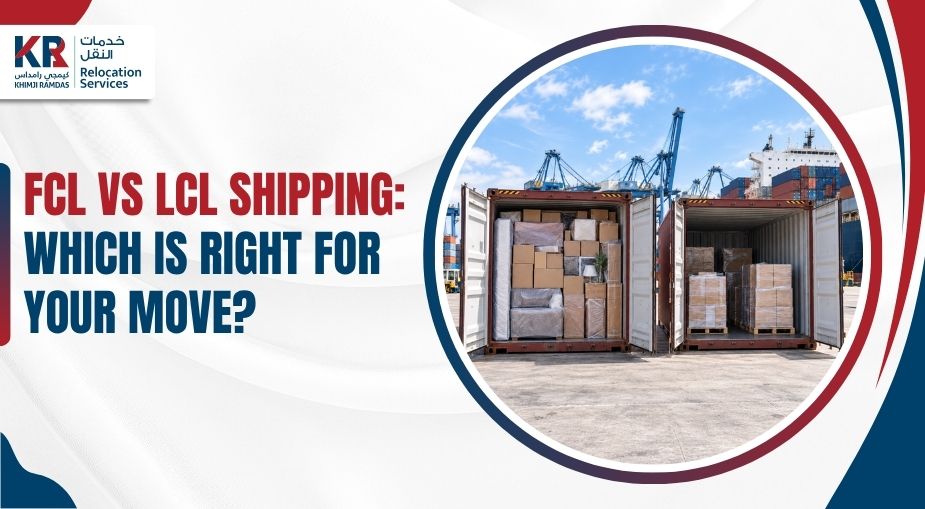
FCL vs LCL shipping can determine whether your UAE international move feels controlled and predictable or becomes more complicated than expected. The right choice depends on your shipment volume, vehicle plans, handling preferences, budget, destination requirements and how much flexibility you need during the move.
For household moves, the cheapest-looking option is not always the most suitable one.
This guide explains how full container load and less than container load work, compares their practical differences, and shows how to decide with help from Khimji Ramdas Relocation Services when your shipment includes furniture, personal effects or a vehicle.
Understanding FCL and LCL Shipping for Household Moves
To compare FCL vs LCL fairly, account for this detail: FCL and LCL are two ways of moving cargo by sea.
FCL means your shipment uses a full container, even if you do not fill every available cubic metre. LCL means your belongings share container space with cargo belonging to other customers.
A practical FCL vs LCL review should account for this. The distinction matters because the shipping method affects how your goods are packed, consolidated, handled, documented and delivered. It also influences the number of handovers involved and how easily your shipment can be planned around a household move.
What FCL Means
With FCL, your household goods are loaded into a dedicated container for the ocean journey.
The container may be loaded at your residence, at a warehouse, or at another approved location depending on the shipment plan and local operating requirements. It is then moved as one sealed unit through the transport network.
In an FCL vs LCL comparison, keep this detail in view: You do not necessarily need to fill the entire container for FCL to make sense.
A household with a larger volume, fragile furniture, specialist equipment or a vehicle may benefit from the control and simpler cargo flow of a dedicated container even when some space remains unused.
The main operational advantage is fewer consolidation-related handling stages. Your goods are not mixed with unrelated consignments in the same container, which can make inventory control and shipment coordination more straightforward.
It does not remove all transport risks, and it does not guarantee a particular arrival date, but it can reduce complexity.
What LCL Means
When weighing FCL vs LCL, consider this point: With LCL, your goods occupy part of a shared container.
A consolidator groups shipments from different customers, often using warehouse facilities to receive, measure, pack or prepare cargo before containerisation. At the destination, the shared container is opened and the consignments are separated for onward delivery.
LCL can be useful when your shipment is relatively small and does not justify the space or cost of a dedicated container. It may suit a person moving a limited number of boxes, selected furniture, or household goods after downsizing.
When reviewing FCL vs LCL options, keep this in view: The trade-off is that shared cargo usually involves additional handling and coordination. Your goods may pass through consolidation and deconsolidation facilities, and the overall schedule depends on the availability of a suitable sailing, consolidation plan and destination handling arrangements.
A Simple Way to Think About the Difference
The practical distinction is not simply ‘large shipment versus small shipment’. It is a choice between dedicated container control and shared-container efficiency.
FCL generally gives you a more direct cargo flow and greater control over loading. LCL generally gives you flexibility when the shipment volume is modest. The best answer depends on the complete shipment rather than on one item or one quoted freight charge.

Tell us about your move and get a personalized quote based on your requirements.
FCL vs LCL: Cost, Handling and Transit Factors
The FCL vs LCL decision becomes clearer when you compare the complete door-to-door move rather than one freight rate. Cost, handling stages, shipment volume, consolidation timing and destination delivery can change the practical value of each option.
Compare the Complete Door-to-Door Cost
An LCL quotation may look attractive when the volume is small, but shared-container shipments can include consolidation, deconsolidation, warehouse handling and destination charges. Ask for the full service scope so you can compare like with like.
For the FCL vs LCL decision, note this point: A full container has a higher space commitment, yet it can become more economical as shipment volume grows.
Packing method, access, container positioning, customs work and final delivery still affect the total price, so the ocean freight line should never be viewed in isolation.
Understand Handling and Transit Differences
LCL cargo normally passes through more shared handling points because it must be grouped with other consignments and separated again at destination. That does not make LCL unsuitable, but fragile or unusually shaped belongings may need stronger packing and closer inventory control.
FCL usually provides a more direct container flow after loading, although port schedules, customs checks and inland delivery still affect timing. Neither method guarantees a fixed arrival date, so build flexibility into housing, storage and handover plans.

Discuss your moving requirements with our team and find the right support for your move.
FCL vs LCL for Vehicles and Mixed Household Shipments
A household move may include furniture, cartons, artwork and a vehicle, which can change the shipping method completely. FCL vs LCL planning should consider whether all items can travel together safely and whether the destination permits the proposed arrangement.
When a Vehicle Changes the Shipping Plan
A vehicle may require a dedicated container, separate vehicle shipping or another approved transport method depending on the route and destination rules. Its dimensions, running condition, fuel requirements, documentation and securing method should be reviewed before the household shipment is booked.
This is a useful FCL vs LCL comparison point. Do not assume that a car can simply be added to spare container space. Vehicle import eligibility, customs procedures and loading clearances may create separate requirements, and personal effects placed around a vehicle can be restricted on some routes.
Plan for Destination Access and Delivery
Families planning FCL vs LCL shipping should keep this in mind. The destination matters as much as the origin.
A full container may need suitable road access, parking, permits or a warehouse transfer before final delivery, while LCL goods are usually separated at a facility before the household portion moves onward.
If your new home has limited truck access, strict building times or no space for a container, the last-mile plan can influence the better option. Share the delivery address and access details early so the quotation reflects the real move.
Our moving experts are here to assist you.
How to Choose the Right FCL vs LCL Option
The best choice comes from matching the shipment to your priorities. Use the inventory, estimated volume, fragile-item list, vehicle plan, destination access and timing needs together rather than deciding from the container label alone.
Use Volume, Contents and Priorities
Start with a room-by-room inventory and identify bulky, fragile, high-value or difficult-to-stack items. A professional survey can estimate packed volume more accurately than counting furniture pieces because cartons, protective materials and dismantling choices all change the space required.
The FCL vs LCL decision should include this detail. Then decide what matters most: lower cost for a modest shipment, fewer shared handling stages, flexibility, faster readiness, or the ability to include unusual items. Your priorities may point clearly toward one method even before the final quotation is prepared.
Compare Quotes on the Same Scope
Ask each quotation to show origin services, packing, transport to port, sea freight, destination handling, customs support, storage if needed and final delivery. Different inclusions can make two prices look comparable when they are not.
Khimji Ramdas Relocation Services can review the inventory and destination requirements with you, explain the practical differences between the available shipping arrangements and build the selected method into a wider international relocation plan.
Wrapping Up
FCL vs LCL is not simply a question of big shipment versus small shipment. The right answer depends on volume, contents, handling sensitivity, vehicle plans, destination access, timing and the complete door-to-door cost.
Review those factors together before booking. Khimji Ramdas Relocation Services can help assess your household inventory and coordinate an international move around the shipping method that best fits the actual requirements.


FAQs - FCL vs LCL
What is the main difference between FCL and LCL shipping?
FCL uses a dedicated container for one shipment, while LCL shares container space with other cargo. FCL offers simpler handling; LCL can suit smaller household shipments.
Is FCL or LCL cheaper for a UAE international move?
LCL may cost less for a small shipment, but FCL can offer better value as volume grows. Compare the complete door-to-door scope, not only the ocean freight charge.
How much household goods are needed for FCL shipping?
There is no universal minimum because container sizes, packing methods and shipment contents vary. A survey or detailed inventory can show whether a dedicated container is practical.
Is FCL safer than LCL for household belongings?
In FCL vs LCL planning, this context matters: FCL can reduce shared-cargo handling, but neither option removes transport risk. Careful packing, inventory control, suitable protection and coordinated handling remain essential.
Can a vehicle be shipped with FCL or LCL cargo?
Vehicle shipping depends on the car, route, destination rules, container suitability and documentation. Discuss auto car transport separately with a qualified relocation coordinator.
Does FCL arrive faster than LCL shipping?
FCL may have a simpler cargo flow, while LCL can involve consolidation and deconsolidation. Actual timing varies by route, sailing, port and destination arrangements.
How do I choose the best FCL or LCL option for my move?
Compare volume, contents, handling sensitivity, destination access, budget and vehicle plans. Khimji Ramdas Relocation Services can assess your inventory and recommend a suitable approach.
Explore Our Most Relevant Articles
With a dedicated single point of contact offering comprehensive, tailored solutions, streamlined processes, and a network of suppliers, we ensure a superior relocation experience. Our commitment to excellence ensures that every aspect of the relocation process is efficiently managed, delivering satisfaction to our clients.
Moving to Dubai vs Sharjah: Complete Family Relocation Guide
Compare Dubai vs Sharjah for family relocation, including housing, commute, lifestyle, costs and practical moving advice from Khimji Ramdas Relocation Services.

Moving to a High Rise in Dubai? What to Check Before Booking Movers
Moving to a high rise in Dubai? Learn how to check lift bookings, parking, loading access, building approvals and large-item routes before booking movers.
Budgeting a Company Relocation to Dubai: What’s Actually Included
Plan a company relocation to Dubai with a realistic budget covering office moving, employees, storage, technology, hidden costs and quote comparisons.