Freight Forwarder vs Relocation Company: Key Differences
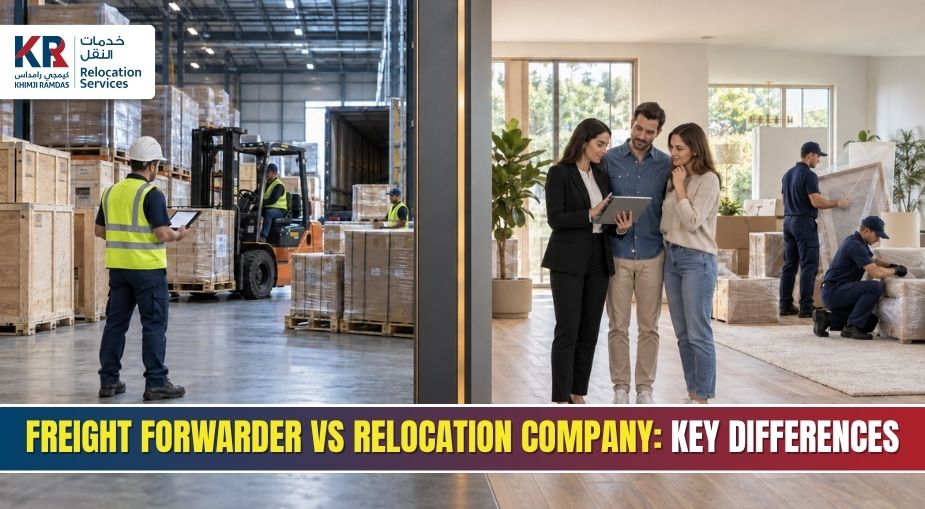
Freight forwarder decisions can be confusing when you are moving household belongings internationally, especially when one quotation focuses on transport while another covers packing, customs coordination and delivery to your new home.
The right choice depends on how much of the relocation you want to organise yourself and how much responsibility you want one provider to manage.
For a household move, the difference between freight forwarding and a relocation company affects more than the shipping price. It can determine who packs your possessions, prepares the shipment information, coordinates collection, supports the customs clearance process and resolves practical issues at the destination.
This guide explains both options so you can choose the right level of support and approach Khimji Ramdas Relocation Services for an informed international moving consultation when appropriate.
Freight Forwarder vs Relocation Company: What Is the Core Difference?
A freight forwarder primarily arranges the movement of cargo between locations. A relocation company manages the wider household move, which may include professional packing, inventory preparation, transport coordination, customs support, delivery, unpacking and settling-in assistance. The two services can overlap, but they are designed around different customer needs.
What a Freight Forwarder Typically Does
A freight forwarder acts as a logistics organiser for shipments. Depending on the provider and the agreed scope, it may arrange ocean or air transport, coordinate with carriers, consolidate cargo, issue or manage shipping documentation and provide updates on the shipment’s progress.
For example, a person who has already packed their belongings and can deliver them to a port, warehouse or freight terminal may use a freight forwarder to arrange international transport.
The forwarder may also coordinate with a customs broker or other parties involved in the shipment, but the exact responsibility should be confirmed before booking.
Freight forwarding is often suitable when the customer understands shipping processes, has a manageable amount of cargo and is prepared to organise several parts of the move independently. It may also be relevant for commercial cargo or goods that are already prepared for transport rather than a complete household relocation.
What a Relocation Company Adds
A relocation company starts with the household and the destination, not only with the cargo movement. Its role is to plan how possessions will be assessed, packed, labelled, documented, collected, shipped, cleared and delivered to the residence.
To assess a freight forwarder properly, note this point: For a family moving from one country to another, this wider coordination can remove several handovers.
A professional relocation team can help identify items that may require special attention, prepare an inventory for shipping, explain what information is needed for the customs clearance process and coordinate delivery conditions at the destination.
Khimji Ramdas Relocation Services provides international moving support for customers who need more than a port-to-port freight arrangement. The appropriate scope still depends on the shipment, origin, destination, access conditions and customer requirements, so the quotation should clearly state which services are included and which remain the customer’s responsibility.
Why the Difference Matters for Household Moves
Household moves contain many small decisions that do not appear in a basic freight quote. A lift, narrow staircase, restricted parking area, fragile artwork, large appliance or delayed handover date can affect how the move should be planned.
A freight forwarder may successfully move the cargo between transport points, but that does not necessarily mean someone is managing the household move at either end. A relocation company is generally chosen when the customer wants a coordinated service that connects packing, transport and residence delivery into one practical plan.

Tell us about your move and get a personalized quote based on your requirements.
Comparing Transportation, Packing and Door-to-Door Support
Transportation is only one stage of an international household move. To compare providers properly, look at the complete journey from the current home to the new residence. Ask where responsibility changes hands, who supervises each stage and what happens if the planned collection or delivery conditions change.
Transportation: Port-to-Port or Residence-to-Residence
A freight forwarder commonly focuses on transporting cargo through a shipping network. The movement may involve road transport at origin, ocean or air freight, handling at terminals and onward transport at destination. However, the precise arrangement varies by quotation.
A relocation company can coordinate these transport stages as part of a broader move. The key distinction is that the shipment is planned around the residence rather than ending at a port or terminal.
This can include arranging collection from the origin home and delivery to the destination home, subject to access, local rules and the agreed service scope.
For example, a port-to-port shipment may require you to arrange transport from your home to the origin terminal, collect or release the cargo at destination and organise the final delivery yourself.
A door-to-door service aims to coordinate those additional legs, but you should confirm whether stairs, long carries, storage, lift restrictions or special handling are included.
Packing and Protection of Household Goods
Packing is one of the clearest differences between the two provider types. A freight forwarder may accept cargo that the customer has packed, labelled and prepared. Some forwarders offer packing, but it should not be assumed from the term freight specialist alone.
Professional household packing involves more than placing items in boxes. The team must assess the contents, separate fragile or high-value possessions, choose suitable materials, protect furniture and create an inventory that can be matched to the shipment.
Certain belongings may need custom crating or additional preparation, while other items may be unsuitable for transport or subject to destination restrictions.
This is also relevant when choosing a freight forwarder: A relocation company is normally better suited to customers who want this work managed by an experienced moving team.
Before the pack day, clarify whether packing includes wardrobes, kitchen contents, artwork, electronics, outdoor items and dismantling or reassembly of furniture. Also ask how pre-packed boxes will be treated and whether they are included in the inventory process.
FCL and LCL Choices
International household shipments may move as full-container load, commonly called FCL, or less-than-container load, commonly called LCL.
FCL may be appropriate when the volume justifies a dedicated container, while LCL consolidates cargo with other shipments. The most suitable option depends on volume, destination, timing, cargo characteristics and the available service plan.
A freight forwarder can explain the transport options, but a relocation company can help connect the choice to the household inventory and delivery plan. LCL may involve additional handling points, while FCL may require careful planning for loading, container access and delivery. Neither option is automatically best for every household.
Door-to-Door Support and Practical Handover
Door-to-door support is valuable because it reduces the number of separate parties you must coordinate. It does not mean that every possible service is automatically included. Confirm whether the quotation covers packing, origin collection, export documentation support, freight, destination handling, customs coordination, delivery and unpacking.
This is also relevant when choosing a freight forwarder: At Khimji Ramdas Relocation Services, customers can discuss their household contents and destination requirements with an international moving team rather than selecting a transport method in isolation.
That conversation helps identify whether a managed relocation service or a narrower freight arrangement is more appropriate.

Discuss your moving requirements with our team and find the right support for your move.
How Documentation and the Customs Clearance Process Differ
Documentation is where an apparently simple shipping arrangement can become difficult. International household moves involve shipment details, inventories and destination requirements that may vary by country, authority, cargo type and customer circumstances.
A provider should explain what it will prepare, what information it needs from you and which decisions remain with customs or other authorities.
The Role of an International Freight Forwarder
An international freight forwarder coordinates the movement of cargo across borders and works with carriers, terminals and logistics partners. It may prepare, collect or manage shipping documents within its agreed scope and provide information needed for transport and cargo handling.
However, the forwarder does not control customs decisions. It also may not be responsible for checking every household item against the destination country’s rules unless that service is expressly included. Before accepting a quote, ask whether the provider is arranging only transport or also supporting origin and destination documentation.
What a Customs Broker Does
A customs broker is a specialist or authorised intermediary that helps prepare and submit customs information on behalf of an importer or consignee, where permitted and applicable.
The broker may review shipment details, classify or describe goods, communicate with customs authorities and advise on information or charges that may be required.
A customs broker is not automatically the same as a freight forwarder or relocation company. Some organisations coordinate with brokers, while others may include customs-related support within their own service model. The exact arrangement differs by country and shipment type.
Most importantly, a customs broker cannot guarantee a particular customs outcome. Authorities may request clarification, inspect goods or apply requirements outside the service provider’s control. Requirements can also differ for personal effects, restricted goods, vehicles, pets and other categories.
Preparing for the Customs Clearance Process
A complete and accurate inventory is one of the most useful things a customer can provide. Descriptions such as “miscellaneous” are less helpful than clear descriptions of the items, their quantities and, where relevant, their approximate age or value.
Keep supporting information for items that may need additional explanation, such as new purchases, medicines, food, plants, alcohol, batteries or valuable goods.
Before packing, ask these practical questions:
- Who prepares the shipment inventory and who reviews it with me?
- Who coordinates with the customs broker or destination agent?
- Which documents must I provide, and by what stage?
- What happens if customs requests more information or examines the shipment?
For a freight forwarder comparison, keep this detail in view: The answers should be specific to the origin, destination and contents. A responsible relocation provider will explain the process without promising that customs will approve the shipment or waive any applicable charges.
Documentation Support Versus Legal Responsibility
A relocation company can guide and coordinate documentation, but the customer remains responsible for providing accurate information and complying with applicable laws. The provider also cannot replace legal, tax or immigration advice where those matters arise.
This distinction protects both sides. It ensures you understand what the service includes and prevents an assumption that a transport provider controls government approvals. When comparing quotations, look for clear wording around documentation preparation, customs coordination, destination handling and possible third-party charges.
Our moving experts are here to assist you.
Which Provider Fits Your Household International Move?
The best choice depends on your time, experience, shipment complexity and appetite for managing separate suppliers. A lower transport price may not represent a lower total cost if you later need to arrange packing, terminal transport, customs support, storage and final delivery independently.
Choose a Freight Forwarder When You Want a Transport-Led Arrangement
A freight forwarder may suit you when your belongings are already packed, documented and ready for shipment. It can also be appropriate when you have logistics experience, access to reliable transport at both ends and the time to manage terminal and destination arrangements.
This route can work for a small, straightforward consignment where the customer understands exactly what is included. It requires careful checking of handover points, packaging standards, insurance or valuation options, storage arrangements and destination delivery responsibilities.
The phrase “freight broker vs freight forwarder” is also worth understanding. A freight broker generally connects customers or shippers with transport providers and may arrange capacity without performing the same end-to-end shipment coordination as a freight specialist.
The legal meaning and operating model can vary by market, so ask what role the company is performing in your specific shipment.
Choose a Relocation Company When You Need a Managed Move
A relocation company is usually the better fit when you want one coordinated plan for household goods. This is particularly relevant when you are moving with children, have fragile or high-value possessions, need professional packing or are unfamiliar with the destination’s procedures.
It can also be useful when the origin or destination property presents practical challenges. A managed team can consider access, collection conditions, inventory requirements, storage needs and delivery arrangements together rather than treating each issue as a separate booking.
When working with a freight forwarder, account for this requirement: A family moving from the UAE to another country, for instance, may be balancing tenancy handover, school arrangements, travel and new-home readiness.
In that situation, arranging only ocean freight may leave too many operational tasks with the family. A relocation company can help coordinate the moving stages while the customer focuses on the wider transition.
Compare Scope Before Comparing Price
Request quotations on a like-for-like basis. At minimum, compare:
- Packing, wrapping, labelling and inventory preparation.
- Origin collection, freight, destination handling and residence delivery.
- Documentation guidance, customs coordination, storage and unpacking options.
This is also relevant when choosing a freight forwarder: Also check exclusions. Common areas requiring clarification include duties or taxes, inspections, storage caused by delays, restricted items, special access equipment, additional handling and services requested after the quotation.
Requirements and charges vary by route and circumstances, so a written scope is more useful than a headline price.
A Simple Decision Test
If you are mainly seeking cargo movement and can manage the household work yourself, begin by assessing freight forwarding options. If you are seeking a coordinated move from one home to another, compare international moving companies that can explain the full service chain.
The decision should not be based only on whether the provider calls itself a freight forwarder or relocation company. Review its experience with household goods, communication process, destination support, inventory method, claims or issue-escalation procedure and clarity of quotation.
Planning an International Move With Fewer Surprises
Good planning reduces avoidable delays and helps you make a fair comparison between service providers. The earlier you identify what is moving, where it is going and what support you need, the easier it becomes to select the correct transport and service model.
Start With a Household Inventory
When reviewing a freight forwarder quote, keep this in view: Walk through every room and separate items into four groups: take, sell or donate, store and dispose. Then identify goods needing special attention, including artwork, antiques, musical instruments, large appliances, fragile glassware, sports equipment and electronics.
Do not wait until the packing day to mention unusual items. A late discovery can affect packing materials, container planning, documentation or destination acceptability. If you are unsure about an item, disclose it to the provider early and ask for route-specific guidance.
Identify the Service Boundary
Ask the provider to describe the move in stages. A useful quotation should make it clear where the service begins, where responsibility transfers and where it ends.
For example, does collection start inside the residence, at the building entrance or at a loading point? Does delivery include carrying goods into the home, unpacking, debris removal or only placement at the entrance?
When choosing a freight forwarder, consider this point: These details matter in apartment buildings and busy urban areas, where parking, lift booking, loading restrictions or building permissions may affect the operation. They can also matter when the destination home is not ready and temporary storage becomes necessary.
Prepare Questions for the Consultation
A productive consultation is not simply an opportunity to request a price. It is a chance to test whether the provider understands your move. Explain your approximate move date, origin and destination, property type, access conditions, shipment volume and any uncertain items.
Ask how the company will assess volume, what packing standard it uses, how the inventory is recorded, which transport options may be considered and who will coordinate with destination partners. You should also ask how updates are provided and whom to contact if circumstances change.
For a freight forwarder comparison, keep this detail in view: Khimji Ramdas Relocation Services can discuss these considerations as part of its International Moving Services offering.
The purpose of an assessment is to develop a service scope that reflects your belongings and route, rather than forcing every household into the same freight arrangement. You can review the [International Moving Services](https://khimjisrelocations.ae/international-moving-services) offering when deciding whether a coordinated relocation consultation is suitable.
Plan Around Uncertainty
Dates may change because of property handover, travel, work authorisation, destination readiness or third-party transport conditions. Avoid making non-refundable commitments based solely on an assumed transit date unless the provider has explained the relevant limitations.
Keep essential documents, medication, valuables, personal electronics and items needed immediately after arrival separate from the main shipment, subject to applicable travel and destination rules. A relocation team can advise on the shipping plan, but you remain responsible for checking what you carry personally and what may be restricted.
Making the Right Choice With Confidence
The difference between a freight forwarder and a relocation company becomes clear when you examine who is responsible for the complete household journey.
A freight specialist can be an effective logistics partner for prepared cargo, while a relocation company is generally more suitable when you need packing, documentation guidance, customs coordination and delivery managed around your home move.
A customs broker may support part of the customs clearance process, but that role should not be confused with transport coordination or household moving management. Similarly, understanding freight broker vs freight forwarder helps you ask whether a provider is arranging capacity, coordinating a shipment or managing a wider service plan.
Before you choose, ask yourself three questions: Do I want to manage packing and handovers myself? Do I understand what will happen at the origin port and destination?
Would one coordinated contact reduce the practical risk and time involved? Your answers will point towards either a transport-led freight solution or a more comprehensive relocation service.
For households that want assistance from the current residence through to the destination home, Khimji Ramdas Relocation Services can help assess the move, explain the available international moving scope and identify the information needed for a reliable quotation.
The next practical step is to prepare a basic inventory and request a consultation that clearly separates included services, exclusions and customer responsibilities.
Wrapping Up
Choosing between a freight forwarder and a relocation company is ultimately a question of responsibility, not terminology.
Freight forwarding can arrange the international movement of prepared cargo, while a relocation company coordinates the wider household experience, including packing, collection, documentation support, customs coordination and delivery where included in the agreed scope.
For a straightforward, self-managed shipment, a freight forwarder may be appropriate. For a family or individual who wants a door-to-door international move with fewer handovers, a relocation company can provide more practical support.
Compare the complete service rather than the transport line alone, confirm the customs and documentation responsibilities, and disclose unusual or restricted items early.
If you are still deciding, an assessment with Khimji Ramdas Relocation Services can help you understand which International Moving Services are relevant to your origin, destination, household contents and preferred level of involvement.
A clear scope at the beginning is one of the best ways to make your freight forwarder decision with confidence.


FAQs - Freight Forwarder vs Relocation Company
What is the main difference between a freight forwarder and a relocation company?
A freight forwarder mainly arranges cargo transport, while a relocation company manages the wider household move, including packing, inventory, customs coordination and residence delivery where included.
Is a freight forwarder suitable for an international household move?
A freight forwarder may suit a prepared shipment when you can manage packing, documentation, terminal handovers and delivery. For a complete door-to-door move, a relocation company may provide more practical support.
Does a relocation company handle the customs clearance process?
A relocation company can guide and coordinate customs documentation, often working with relevant destination partners. Customs requirements, inspections and decisions vary, and final approval remains with the authorities.
What does a customs broker do in an international move?
A customs broker helps prepare and submit customs information where permitted and applicable. The broker may communicate with customs authorities, but does not replace the freight forwarder or manage every household moving service.
What is the difference between a freight broker and a freight forwarder?
A freight broker generally connects shippers with transport providers, while a freight forwarder coordinates the movement of cargo through a logistics network. The exact roles and legal definitions vary by market.
Does international freight forwarding include packing and door-to-door delivery?
Not necessarily. Some international freight forwarders offer additional services, but packing, residence collection, customs coordination and final delivery must be confirmed in the written quotation.
How can Khimji Ramdas Relocation Services help with an international household move?
Khimji Ramdas Relocation Services can assess your household shipment, coordinate relevant international moving stages and explain available support for packing, transport, documentation, customs coordination and delivery.
Explore Our Most Relevant Articles
With a dedicated single point of contact offering comprehensive, tailored solutions, streamlined processes, and a network of suppliers, we ensure a superior relocation experience. Our commitment to excellence ensures that every aspect of the relocation process is efficiently managed, delivering satisfaction to our clients.
Inter Emirate Moving Made Simple for Your UAE Relocation
Plan inter emirate moving in the UAE with guidance on packing, access, timing, building rules, costs and professional support for a smoother relocation.
Moving to Dubai vs Sharjah: Complete Family Relocation Guide
Compare Dubai vs Sharjah for family relocation, including housing, commute, lifestyle, costs and practical moving advice from Khimji Ramdas Relocation Services.
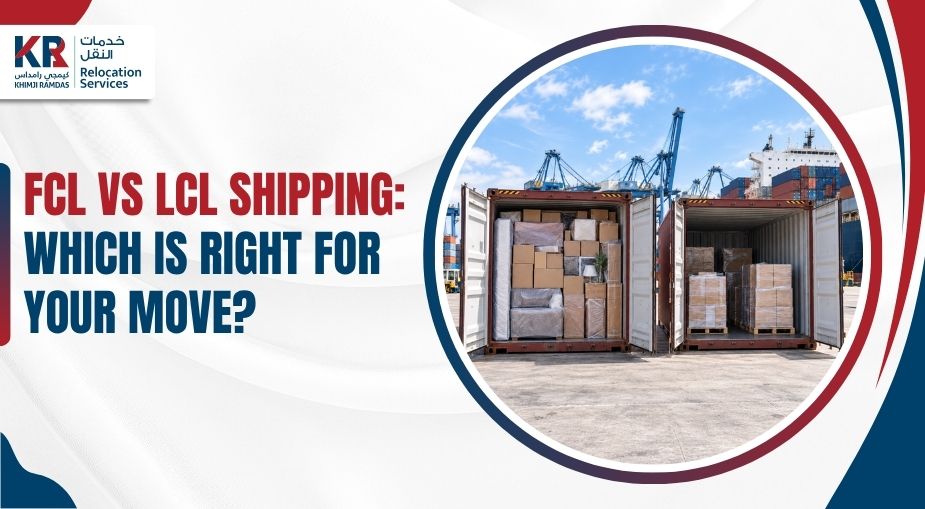
FCL vs LCL Shipping: Which Is Right for Your Move?
Compare FCL vs LCL for UAE international moves, including cost, volume, handling, security, transit factors, vehicle shipping and delivery requirements.