End-to-End Guide to Fine Art Exhibition Logistics in the UAE
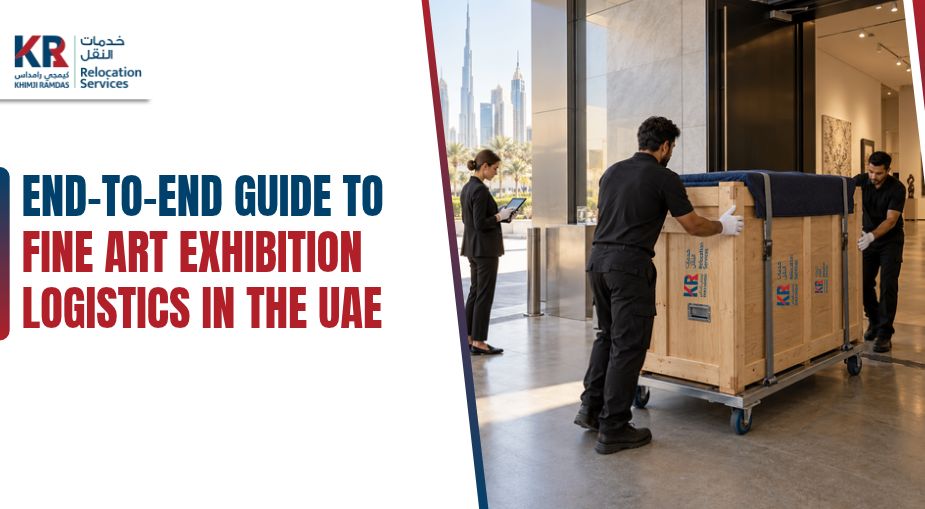
Fine art exhibition logistics in the UAE requires more than moving valuable objects from one address to another; it requires a controlled plan for documentation, handling, environmental exposure, venue access, installation and return movement.
A missed condition note, unsuitable packing method or poorly timed delivery can affect an exhibition before the first visitor arrives.
This guide explains how galleries, artists, curators and exhibition organisers can plan an art exhibition in Dubai, Abu Dhabi or another UAE location with fewer avoidable risks.
It covers the decisions that matter from the first inventory through final return shipping, including when specialist support from Khimji Ramdas Relocation Services may be appropriate.
Planning Fine Art Exhibition Logistics in the UAE
The strongest exhibition moves begin well before packing day. A practical plan must connect the artwork list with the venue schedule, loan obligations, customs or authority requirements where applicable, installation sequence and the intended return route.
Treating each shipment as a separate task often creates gaps between the gallery, lender, carrier, venue and installation team.
Start With the Exhibition Date and Work Backwards
For effective fine art exhibition logistics, begin with the date the venue must be ready for installation, not the public opening. The installation date may be several days earlier, particularly where the exhibition includes large works, complex hanging systems, cases, audiovisual equipment or multiple lenders.
A working schedule should identify:
- The date the final artwork list is confirmed.
- The time needed for condition checks, specialist packing and collection.
- The expected transport and handover window, subject to route, origin, destination and shipment requirements.
- The venue’s receiving hours, loading access and installation restrictions.
- For fine art exhibition logistics, agree the date by which return instructions, insurance information and consignee details must be confirmed.
There is no universal lead time for every project. A small local exhibition may require a simpler plan than a multi-origin international display, while a fragile sculpture or a packed museum case can require more preparation than a larger but robust painting.
Start early enough to allow clarification when the artwork list, venue instructions or shipping documentation changes.
Assign Responsibility for Decisions
As part of fine art exhibition logistics, exhibition logistics usually involves several parties, and uncertainty about responsibility is a common source of delay. Before the move, confirm who is authorised to approve packing changes, collection dates, condition exceptions, delivery substitutions, installation methods and return arrangements.
A useful project file should include the organiser’s primary contact, the venue contact, the lender or owner, the installer, the insurance contact and the logistics coordinator.
It should also record who can make decisions when an item arrives with an unclear condition, when the loading bay is unavailable or when a crate does not fit through the intended access route.
Within fine art exhibition logistics, for a UAE exhibition, ask the venue for practical information rather than relying only on its public address.
Receiving procedures can differ between a gallery, hotel, cultural institution, fairground, warehouse and private residence. Confirm loading bay dimensions, parking or booking requirements, lift capacity, access restrictions, security procedures, unpacking space and whether the venue requires delivery appointments.
Build a Risk Register Before the Shipment
For effective fine art exhibition logistics, a short risk register helps the team focus on real operational issues. Consider fragile surfaces, unsecured components, oversized dimensions, unusual weight distribution, high-value items, mixed materials, restricted access, temporary storage and the possibility of delayed installation.
For example, a framed work may be straightforward to transport but difficult to manoeuvre through a narrow corridor. A sculpture may have a stable base in the studio but require a custom support for movement.
A work containing glass, electronics, organic material or mixed media may need a different packing and environmental approach from a conventional canvas.
In fine art exhibition logistics, the purpose is not to eliminate every uncertainty. It is to identify the issues early enough for a specialist to assess them, for the venue to prepare, and for the organiser to make an informed decision rather than improvising during delivery.

Tell us about your move and get a personalized quote based on your requirements.
Inventory, Condition Reporting and Artwork Readiness
A reliable inventory is the operational reference point for the entire move. It supports packing decisions, collection checks, insurance discussions, handovers, installation and return shipping. If the list is incomplete or inconsistent, the same uncertainty can appear repeatedly at every stage.
Create an Inventory That Can Be Used on Site
When planning fine art exhibition logistics, an exhibition inventory should be more detailed than a list of titles and artists. Where appropriate, record the item reference, artist, title, medium, dimensions, weight, frame or mount details, number of components, packing requirement, collection address, destination, installation position and return instruction.
For an organised fine art exhibition logistics process, dimensions should be clear about whether they refer to the artwork alone, the frame, the plinth, the crate or the assembled object.
For sculptures and installations, record separate components rather than relying on one overall description. Include photographs showing fragile edges, detachable elements, fixing points and any existing marks.
The inventory should also identify items that must travel together. A multipart installation can appear complete when all crates have arrived but still be impossible to install if brackets, tools, plinth components, labels or technical equipment are separated.
Record Condition Before Packing
For effective fine art exhibition logistics, a condition report should describe the artwork’s state before it enters the logistics chain. It is not merely a formality. It creates a reference for collection, unpacking, installation, deinstallation and return inspection.
When planning fine art exhibition logistics, record visible marks, abrasions, frame separation, loose paint, cracks, dents, stains, tears, surface changes, unstable elements and pre-existing repairs.
Use clear photographs taken in consistent lighting, with close-ups for vulnerable areas and wider images that show the item’s overall condition. For three-dimensional works, photograph the base, joins, projections and any areas that may contact a support.
Avoid vague descriptions such as “good condition” when a specific observation is possible. “Small abrasion on the lower right frame edge” is more useful than a general statement.
If the item cannot be examined fully because it is already sealed or installed, record that limitation rather than assuming its condition.
For effective fine art exhibition logistics, at handover, the receiving party should compare the item with the report and note any difference promptly.
A professional logistics team can provide guidance for fine art moving to UAE, helping coordinate the physical handover, condition documentation and other essential arrangements. However, the owner, lender or authorised representative remains responsible for confirming the artwork’s condition and approving any exception.
Check Artwork Readiness Before Collection
Packing cannot correct every problem at the point of collection. Before the scheduled move, confirm that paintings are fully dry where relevant, removable parts are secured, hanging hardware is identified, batteries or sensitive components are addressed, and the work is accessible without dismantling unrelated property.
When planning fine art exhibition logistics, for an installation, label every component in a way that matches the inventory and installation instructions.
Include orientation details where the work can be positioned incorrectly. If the artist or curator has a preferred unpacking sequence, provide it before the shipment leaves the origin.
A practical example is a large mixed-media work arriving at an art exhibition in Abu Dhabi with its main panel intact but its separate lighting controller unlabelled.
The transport itself may have been successful, yet the installation can still be delayed because the receiving team cannot identify the correct component. Clear inventory references prevent this kind of avoidable interruption.

Discuss your moving requirements with our team and find the right support for your move.
Specialist Packing, Fine Art Storage and Climate Considerations
In fine art exhibition logistics, packing is a risk-control decision, not simply a choice between cardboard and a wooden crate. The correct method depends on the artwork’s construction, vulnerability, dimensions, handling route, duration in transit and expected storage conditions.
A packing method that is suitable for a short local transfer may not be appropriate for an international shipment or temporary storage in the UAE.
Match the Packing Method to the Artwork
During fine art exhibition logistics planning, paintings may require protection for the surface, frame corners and reverse, while sculptures may need internal supports that prevent movement without placing pressure on delicate projections.
Works on paper, textiles, photographs and mixed-media pieces can have different sensitivities to abrasion, light, humidity and sudden environmental change.
For higher-risk works, a purpose-built crate may provide better protection than a standard outer carton. The crate design should allow safe loading, lifting and opening, with internal cushioning and restraint that support the object without creating new contact points.
Oversized crates also need to be assessed against doors, lifts, loading bays and vehicle capacity before they are built.
During fine art exhibition logistics planning, the packing record should identify the crate or package reference, orientation, opening instructions and any handling warnings. Photographs of the packed item can help establish how it was secured and support a consistent return process.
Consider the UAE Climate Without Making Assumptions
The UAE’s heat, strong sunlight and humidity can create challenges, but the correct response depends on the route, season, vehicle, building and artwork. Outdoor exposure during loading, an unconditioned holding area, condensation after moving between environments, and poorly controlled temporary storage may all matter.
Within fine art exhibition logistics, climate planning should consider the complete chain rather than only the vehicle.
Ask where the artwork will wait before loading, how long it may be exposed during handover, whether the venue has a suitable receiving area, and how long it may remain in storage before installation.
A climate-sensitive work may need a more carefully controlled sequence than a standard framed item.
Do not assume that a sealed crate automatically solves environmental risk. A crate can protect against handling damage while still requiring appropriate storage and transition practices.
Conversely, not every work requires the same level of environmental control. A specialist assessment should be based on the object and route rather than on a generic promise.
Use Fine Art Storage as Part of the Plan
In fine art exhibition logistics, fine art storage can be useful when the venue cannot receive everything at once, when an exhibition is being installed in stages, or when return shipping cannot begin immediately after closing.
Storage should be planned as a handover, not treated as an invisible gap in the schedule.
Confirm who will access the item, how it will be identified, whether the package remains sealed, and how condition checks will be handled when it enters and leaves storage.
Keep the inventory and crate references aligned with the storage record. If the exhibition contains works from several lenders, separate identification and release instructions can prevent the wrong item from being dispatched.
During fine art exhibition logistics planning, Khimji Ramdas Relocation Services provides relocation support that includes fine arts shipping and storage services as verified through its service offering.
For a project requiring specialist coordination, you can review the fine arts shipping services page and discuss the artwork, route, timing and storage requirements before selecting an approach.
Avoid Last-Minute Packing Changes
A common operational mistake is changing the packing method after collection has been scheduled. New artwork dimensions, a late frame change or an added component can affect crate size, vehicle loading and venue access.
If the inventory changes, update the packing and transport plan rather than assuming the original arrangements remain suitable.
Our moving experts are here to assist you.
Transport, Venue Coordination and Installation
Within fine art exhibition logistics, transport is only one stage of exhibition delivery. The shipment must arrive at a place and time when the venue can receive it, inspect it and move it safely to the installation area.
A vehicle arriving early may still be unhelpful if the loading bay is occupied; a vehicle arriving on time may create problems if the lift, security clearance or unpacking area was not arranged.
Coordinate the Delivery With the Venue
Obtain written venue instructions and circulate them to the relevant parties. Confirm the delivery address, loading entrance, vehicle restrictions, receiving contact, appointment process, security requirements, lift dimensions, unpacking location and disposal arrangements for temporary packing materials.
During fine art exhibition logistics planning, for an art exhibition in Dubai, access may vary significantly between a gallery in a commercial building, a stand at an exhibition venue and a private event location.
In Abu Dhabi, the same principle applies: the address alone does not describe the route from the vehicle to the display position. Measure doors, corridors, turns and lifts where the work or crate is close to the available clearance.
If the venue requires an exact delivery window, build the transport plan around that appointment rather than treating it as a preference. Share the final inventory and packing references with the venue team so they can identify each package quickly on arrival.
Plan the Physical Handover
For effective fine art exhibition logistics, at delivery, inspect the outer packaging before opening. Note visible impact, puncture, water exposure, crushed corners or signs that the package has been moved incorrectly.
Open the item in a suitable area, following the packing sequence, and compare it with the condition report.
The handover should identify what has arrived, who accepted it and whether any exception was recorded.
If there is a concern, photograph it immediately and notify the appropriate owner, lender, insurer or project contact according to the agreed process. Do not conceal a problem by proceeding directly to installation.
As part of fine art exhibition logistics, the logistics provider can coordinate movement and documentation, but the venue, lender or authorised representative may need to make decisions about acceptance, conservation assessment or display.
Clear escalation arrangements prevent the transport team from being asked to make decisions outside its role.
Treat Installation as a Separate Operation
During fine art exhibition logistics planning, installation requires more than delivering a crate to the loading bay. It may involve unpacking, moving into position, hanging, levelling, securing, assembling, testing and removing packing materials. The required expertise depends on the artwork and the venue’s own installation arrangements.
Before delivery, confirm who is responsible for wall preparation, hanging hardware, plinths, lifting equipment, electrical connections, labels, protective barriers and final alignment.
For complex works, prepare an installation sequence that follows the physical constraints of the space. Install heavier or more difficult items only when the correct equipment and personnel are available.
Within fine art exhibition logistics, a useful example is a sculpture scheduled for an evening opening. If the work arrives without sufficient time for unpacking, base assembly and a condition check, the organiser may face pressure to rush the final steps.
A better plan reserves installation time before the public-facing deadline and allows for a controlled response if a component or fixing does not match the approved instructions.
Communicate Changes Immediately
Exhibition plans change. A lender may add a work, the venue may revise its delivery window, or an artist may alter the installation method. Communicate changes as soon as they are known and confirm their effect on packing, transport, access, insurance and return movement.
For effective fine art exhibition logistics, Khimji Ramdas Relocation Services can be considered when an organiser needs a single point of coordination for relevant moving, shipping, storage or relocation activities.
The practical value is greatest when the scope is explained early and the team can assess the specific artworks, route, venue and schedule rather than receiving a last-minute request with incomplete information.
Return Shipping, Close-Out and Choosing the Right Logistics Partner
In fine art exhibition logistics, the exhibition is not complete when the last visitor leaves.
Deinstallation and return shipping can be more demanding because works may be tired from handling, the venue may be under time pressure, and the original packing materials may not be available in the same condition. Build the return plan before the exhibition opens.
Agree the Return Route Before the Opening
Within fine art exhibition logistics, for each item, confirm whether it will return to the original owner, move to another venue, go into storage or be collected by a different party.
Record the destination, consignee, required date, condition-report responsibility and any change to the original packing or transport method.
If the artwork has been displayed in a new frame, assembled differently or fitted with additional components, update the inventory and return instructions.
Do not assume the outbound crate can be reused without inspection. Look for damage, weakened hinges, missing fasteners, contaminated packing materials or internal supports that no longer fit.
During fine art exhibition logistics planning, where an international return is involved, requirements may vary according to the countries, authorities, shipment type, artwork and documentation.
Customs clearance, permits, taxes, duties and other official decisions are outside the control of a logistics provider and should be checked for the specific shipment with the relevant authorities or advisers. A specialist shipping company can help prepare and coordinate information, but it cannot guarantee an authority’s outcome.
Complete the Close-Out Properly
When planning fine art exhibition logistics, a disciplined close-out includes the final condition report, photographs, package count, collection record, storage release record where relevant, and confirmation that the venue has been cleared of crates and temporary materials.
Keep copies with the project file rather than relying on individual emails.
Compare the opening and closing records. A discrepancy does not automatically prove when or how damage occurred, but early documentation gives the responsible parties a better basis for investigation.
If an item is being transferred directly to another exhibition, make sure the next venue receives the current condition information and handling instructions.
Evaluate a Fine Art Shipping Company on Process, Not Slogans
Within fine art exhibition logistics, when comparing a fine art shipping company, ask how it will understand the artwork, document condition, select packing, coordinate access, manage handovers and communicate exceptions.
The lowest quotation may not represent the lowest overall risk if it excludes collection complexity, storage, special handling, venue appointments or return movement.
Useful questions include:
- Who will review the inventory and identify items needing specialist assessment?
- How will the packing, collection, delivery and installation responsibilities be defined?
- What information is required before a route, storage arrangement or quotation can be assessed?
- How are condition reports, handovers and exceptions documented?
- What happens if the venue changes its receiving time or an item is not ready?
- For effective fine art exhibition logistics, look for a clear scope rather than an apparently comprehensive promise.
Ask the provider to state what is included, what depends on third parties, and which requirements must be confirmed by the gallery, lender, venue or authority. This is particularly important for international fine art shipping, where origin and destination conditions may differ.
Practical Pre-Dispatch Checklist
Before the first item leaves the origin, confirm that the project file contains:
- Keep a final or clearly versioned inventory with dimensions, components and destinations for fine art exhibition logistics.
- Condition reports and photographs for every artwork or package.
- Packing and crate references that match the inventory.
- Confirmed collection and delivery contacts, access instructions and appointment windows.
- Installation and return instructions, including storage or onward-destination details.
- Agreed escalation contacts for damage, delay, missing components or access problems.
The checklist is not a replacement for specialist judgement. It is a way to expose missing information while there is still time to correct it.
Wrapping Up
Successful fine art exhibition logistics in the UAE depends on a connected process: plan from the installation date, document every work, match packing to the object, consider the full climate and access chain, coordinate the venue, control the handover and prepare the return before the exhibition opens.
The best plan is detailed enough to guide the team but flexible enough to handle changes without losing accountability.
During fine art exhibition logistics planning, for galleries, artists, curators and exhibition organisers, the next step is to assemble the inventory, photographs, origin and destination details, venue instructions and proposed dates.
Khimji Ramdas Relocation Services can then assess the relevant fine arts shipping, storage and coordination requirements on the basis of the actual project rather than assumptions. That preparation gives everyone a clearer view of the work involved and the decisions that must be made before collection.

FAQs - Fine Art Exhibition Logistics in the UAE
What does Fine Art Exhibition Logistics include in the UAE?
Fine art exhibition logistics can include inventory review, condition reporting, specialist packing, collection, transport, storage, venue coordination, delivery, installation support and return shipping. The exact scope depends on the artworks, route and venue.
How early should I plan Fine Art Exhibition Logistics for a UAE exhibition?
Start planning as soon as the artwork list and exhibition dates are reasonably known. Required lead time varies by origin, destination, artwork complexity, packing, storage, venue access and applicable shipment requirements.
What should an artwork inventory contain before fine art shipping?
During fine art exhibition logistics planning, record the artwork reference, artist, title, medium, dimensions, weight, frame or mount, components, photographs, condition, origin, destination, packing needs and return instructions. List multipart works component by component.
Is fine art storage needed between transport and exhibition installation?
Fine art storage may help when a venue cannot receive all works at once, installation is staged or return movement is delayed. Define identification, access, condition checks and release instructions for every item.
How are artworks protected from UAE heat and humidity during transport?
For effective fine art exhibition logistics, protection depends on the artwork, route, season, vehicle, storage area and venue. Planning should address loading exposure, environmental transitions and temporary storage rather than assuming a crate alone controls climate risk.
Can a fine art shipping company manage installation and return shipping?
Some providers may coordinate installation and return activities, but the scope must be confirmed for each project. Ask who handles unpacking, condition checks, installation, deinstallation, repacking, storage and onward transport.
Can Khimji Ramdas Relocation Services support an art exhibition in Dubai or Abu Dhabi?
For fine art exhibition logistics, Khimji Ramdas Relocation Services can discuss relevant fine arts shipping and storage requirements for exhibitions in Dubai, Abu Dhabi or other UAE locations. Scope, access and shipment requirements should be assessed for each project.
Explore Our Most Relevant Articles
With a dedicated single point of contact offering comprehensive, tailored solutions, streamlined processes, and a network of suppliers, we ensure a superior relocation experience. Our commitment to excellence ensures that every aspect of the relocation process is efficiently managed, delivering satisfaction to our clients.

Why Businesses Need Office Relocation Consultant for Big Moves
Learn how a relocation consultant coordinates office moves, IT, employees, vendors and continuity with support from Khimji Ramdas Relocation Services.

High End Movers: What Makes a Luxury Relocation Truly Different?
Learn what sets high end movers apart, from specialist packing and security to fine art, vehicles, storage and personalised luxury relocation planning.
Smooth Moving Checklist: 15 Steps UAE Families Often Forget
Use this smooth moving checklist for UAE families to plan packing, access, utilities, valuables, address changes and professional local moving support.