Furniture Movers in Al Taawun: From Packing to Final Setup

Furniture movers in Al Taawun can make a high-rise move far easier, but only when packing, building access and final placement are planned together rather than treated as separate tasks.
A move in Al Taawun often involves lifts, loading bays, parking restrictions, narrow corridors and delivery windows. This guide explains how to prepare your furniture, coordinate with building management, protect shared areas, manage moving day and decide when professional support from Khimji Ramdas Relocation Services is worthwhile.
Furniture Movers in Al Taawun: What Makes the Move Different
Moving furniture in Al Taawun is rarely just a matter of carrying items from one door to another. Many apartments are in multi-storey buildings where the route from the flat to the vehicle can involve a service lift, basement parking, a loading area, security checks and several shared access points. Each part of that route can affect the time, safety and condition of your furniture.
The most useful way to plan is to think in terms of the complete movement path: the furniture’s current position, the exit from the room, the apartment doorway, the corridor, the lift, the building entrance, the loading area and the vehicle. A sofa that fits comfortably in a living room may still present a problem at a sharp corridor turn or inside a smaller lift.
Check the Building Before Packing
Speak to the building management or landlord before the moving date. Confirm whether movers must reserve a service lift, whether a loading bay is available, how long a vehicle may wait, and whether security requires the tenant to submit a moving request in advance. These procedures differ between buildings, so avoid relying on a neighbour’s experience in another tower.
Ask specifically about the preferred entrance for furniture, lift dimensions, protective requirements for common areas and the permitted moving hours. Some buildings may also require the moving crew to report to security, provide identification or use a particular parking route. The building’s own instructions should take priority over assumptions.
Measure the Difficult Items, Not Just the Rooms
Measure large furniture at its widest, tallest and deepest points. Include removable legs, handles, arms, headboards and protective wrapping when assessing the route. Then compare those measurements with doorways, lift doors, stairwell landings and tight turns.
This matters particularly for corner sofas, large wardrobes, bed frames, marble tables, display cabinets and appliances. If an item cannot be safely moved through the planned route, it may need partial disassembly, a different angle of movement or a specialist assessment. Do not wait until the crew is at the apartment to discover the issue.
Decide What Is Moving and What Is Not
A furniture move becomes slower and more expensive in effort when unwanted items are packed, carried and unloaded before being discarded. Separate items into four groups: moving, donating or selling, recycling or disposal, and items requiring special advice.
The last group may include fragile glass, valuable artwork, unusually heavy pieces or furniture with unstable frames. Photographing these items before packing also creates a useful condition record and helps the moving team understand what requires additional protection.
Planning Al Taawun Apartment Movers Around Access and Timing
For Al Taawun apartment movers, access planning is often the difference between a controlled move and a day spent waiting at the entrance. The furniture may be ready, but the crew cannot work efficiently if the lift is occupied, the vehicle cannot reach the building or the loading area is blocked.
A reliable plan confirms the building arrangements before the packing team arrives. Khimji Ramdas Relocation Services can help you organise the moving process around the information available from your building and your household inventory, while the building management remains responsible for its own access approvals and rules.
Reserve the Right Lift
Ask whether the building requires a service lift booking rather than a normal passenger-lift booking. A service lift may have different dimensions, access controls or operating hours. Record the reservation time and any instructions from management, and keep the relevant contact available on moving day.
If the booking is for a limited window, avoid scheduling packing, dismantling and loading so tightly that a delay at the beginning removes the lift time needed later. Where possible, have the crew start with the largest or most access-sensitive items after the lift is available.
Confirm Loading Bay Access
Loading bay access should be treated as a separate planning item. Confirm where the vehicle may stop, whether basement clearance is suitable, whether a reversing route is required and how far the crew must carry items between the building and the vehicle.
Share accurate information about the vehicle and the approximate volume of furniture with the moving coordinator. A vehicle that is suitable for the household may not be suitable for the building’s height restrictions or access route. If no dedicated bay is available, ask management where short-term loading is permitted rather than leaving the vehicle in an unauthorised position.
Build a Practical Moving-Day Schedule
Allow time for security checks, lift waiting, protective covering, dismantling, loading and a final inspection of the apartment. A compact move can still take longer than expected if there are several floors, a long internal route or only one usable lift.
A useful sequence is to prepare the access route first, dismantle selected furniture, protect floors and corners, move large pieces before smaller cartons, and reserve a final walk-through for cupboards, balconies, storage rooms and utility areas. The aim is not to move quickly at any cost; it is to prevent avoidable handling and access problems.
Keep Essential Items With You
Do not place passports, tenancy documents, medication, chargers, keys, valuables or the first-night essentials in the moving vehicle unless you have made a deliberate decision to do so. Keep these items in a separate bag that stays with you. You should also retain the building access details and the moving coordinator’s contact information until the move is complete.
Tell us about your move and get a personalized quote based on your requirements. 
Preparing Furniture for a Safe Move
Good furniture protection starts before the crew lifts anything. Dust, loose fittings, open drawers and unsecured doors can all create problems during handling. The objective is to make each item stable, easier to grip and protected against contact with walls, floors and other furniture.
A professional assessment is especially useful when an item is heavy, fragile, valuable or difficult to dismantle. Khimji Ramdas Relocation Services provides furniture moving services for situations where furniture requires more than basic carton packing, although the precise method depends on the item and the route.
Prepare Sofas, Beds and Wardrobes
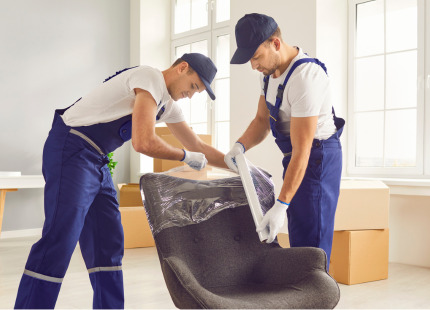
For bulky sofa transport, remove cushions, detachable legs and other parts that can be safely separated. Wrap exposed arms and corners carefully, but do not use thin household plastic directly against delicate finishes if it may trap moisture or cause marking. A sofa should be covered in a way that protects the upholstery while still allowing the movers to grip it securely.
Bed frames should be dismantled where practical, with bolts, washers and brackets placed in a labelled bag attached to the frame. Wardrobes need particular attention because their weight may be uneven and doors or mirrors can shift. A wardrobe moving service should include an assessment of whether the unit can be moved intact or should be emptied and dismantled.
Protect Drawers, Doors and Glass
Empty drawers before moving them. Secure doors and drawers so they cannot open during lifting, but avoid adhesive that may damage paint, veneer or polished surfaces. Glass shelves, mirrors and cabinet doors should be removed when safe to do so and packed separately with clear labels.
Do not assume that a blanket alone protects a fragile surface. Padding reduces impact and abrasion, but corners, edges and glass still need controlled handling. Tell the movers about repaired joints, loose legs, delicate finishes or items that must remain upright.
Avoid Common Packing Mistakes
Overfilled drawers, unlabelled hardware and last-minute dismantling are frequent sources of delay. Another common mistake is wrapping furniture before it is fully dry after cleaning. Moisture trapped beneath covering can mark some materials, particularly during warm weather.
Before packing, photograph complicated assemblies and label each package by item and destination room. For example, “master bed—side rail hardware” is more useful than “metal parts”. Keep a simple inventory of high-value or easily overlooked pieces so the final setup can be checked efficiently.
What to Expect on Moving Day and During Final Setup
The moving team’s work does not end when furniture reaches the new doorway. The final stage involves placing items safely, checking for damage, rebuilding agreed furniture and leaving the property ready for you to use. A clear handover reduces confusion, particularly when several rooms are being arranged at once.
Start With a Walk-Through
Before loading begins, walk through the apartment with the moving coordinator. Identify furniture that needs dismantling, items that will not be moved, fragile pieces and the intended destination of major items. Point out narrow routes, floor finishes, wall features and any existing marks.
The same approach should be used at the destination. Explain which room each large item belongs in and identify any areas that must remain clear. Moving a wardrobe twice because its final position was not agreed wastes time and increases handling risk.
Protect Shared and Private Areas
In a high-rise move, protection is needed beyond the apartment itself. Lift walls, corridor corners, door frames and flooring may be exposed to contact from large items. Building requirements may specify the type of protection permitted, so confirm those expectations in advance.
Inside the apartment, remove small objects from the route and protect vulnerable flooring where appropriate. Keep children and pets away from active carrying areas. A clear route allows the crew to communicate, turn furniture safely and avoid improvised movements.
Check Placement Before Reassembly
Large pieces should be positioned before beds, wardrobes or other items are fully reassembled. Confirm clearances around doors, sockets, windows, air-conditioning units and wardrobes. This is particularly important in compact apartments, where a few centimetres can determine whether a cupboard door opens properly.
If furniture is being reassembled, check that the correct hardware is used and that the item is stable before loading it with belongings. Do not force a piece into a space simply because it was there previously; the new room may have different access, skirting or wall conditions.
Complete a Final Room-by-Room Check
Walk through every room after the crew has finished. Check cupboards, balconies, storage areas, the lift lobby and the vehicle for items left behind. Confirm that furniture is in the agreed position and that packaging, spare fittings and protective materials have been accounted for.
If you notice a concern, raise it promptly with the moving coordinator and record relevant details while the move is still being closed out. A calm, documented handover is more useful than trying to reconstruct what happened days later.
Discuss your moving requirements with our team and find the right support for your move. 
Choosing the Right Local Moving Support in Al Taawun
The cheapest-looking moving option is not always the most efficient one. A useful comparison looks at how well the provider understands access planning, furniture protection, communication and the limits of what it can control. This is particularly important when your move depends on a tower’s lift reservation or loading arrangements.
When comparing furniture movers in Al Taawun, ask how they assess large items, whether dismantling and reassembly are discussed in advance, how fragile surfaces are protected, and how access delays are handled. You should also clarify what information the provider needs from you and what must be confirmed directly with building management.
Match the Service to the Furniture
A small move of already dismantled furniture may need straightforward transport and placement. A larger apartment move may require packing, furniture wrapping, dismantling, loading, delivery and setup. Valuable, fragile or unusually shaped pieces deserve a more specific discussion rather than a generic vehicle-only quotation.
Share photographs or measurements when requested. They help the coordinator identify bulky items and plan the crew, equipment and vehicle more realistically. If access is uncertain, describe the building, floor, lift route and parking conditions honestly; incomplete information can create avoidable changes on the day.
Consider Coordination, Not Only Carrying
A local move still involves coordination between you, the building, security and the moving team. A provider that helps structure the process can reduce the chance of a crew arriving before the lift is available or a vehicle reaching an unsuitable entrance.
You can explore the company’s local moving services in Sharjah to understand how local household moves may be organised. Service details, availability and the work included should be confirmed for your particular move rather than assumed from a general webpage.
Prepare a Short Handover Brief
Give the moving coordinator a concise written brief containing the origin and destination addresses, building contacts, floor numbers, lift arrangements, access restrictions, major furniture dimensions, items requiring dismantling and your preferred room placement. Include any time-sensitive constraint, such as a tenancy handover or building booking.
This brief does not replace an on-site assessment, but it gives everyone the same working information. For broader local context, you can also review the [Sharjah moving services information](https://khimjisrelocations.ae/sharjah/) before discussing your requirements with Khimji Ramdas Relocation Services.
Know Which Decisions Are Yours
Building permissions, parking instructions and lift access are controlled by the relevant property management or authority. Customs and government approvals are not normally part of a straightforward local furniture move, but any requirement that does arise should be verified with the responsible party.
Your role is to provide accurate information, secure the required building arrangements, identify items that need special care and approve the final placement. The moving team’s role is to coordinate the agreed work and handle the furniture using an appropriate method. Clear boundaries create more realistic expectations and a smoother move.
Wrapping Up
A successful furniture move in Al Taawun depends on preparation at both ends of the journey. Check the building route, reserve the appropriate lift, confirm loading arrangements, measure difficult furniture, protect delicate surfaces and decide where major pieces will go before moving day. These steps reduce waiting, repeated handling and unpleasant surprises.
If your move includes a bulky sofa, full wardrobes, fragile furniture or a high-rise access route, professional support can be a practical risk-management decision rather than a luxury. Khimji Ramdas Relocation Services can help coordinate the moving process and furniture handling according to your household requirements, while access approvals and building rules should be confirmed with the relevant management team.
The best time to resolve a lift, doorway or loading problem is before the furniture is wrapped. With the route and responsibilities understood in advance, you can approach furniture movers in Al Taawun with a clearer brief and move into your new home with less disruption.

FAQs - Furniture Movers in Al Taawun
What should I confirm with my Al Taawun building before booking furniture movers?
Confirm service-lift reservations, moving hours, loading-bay access, vehicle restrictions, security procedures and protection requirements. Building rules vary, so verify them directly with management before moving day.
How do furniture movers handle a sofa that may not fit in the lift?
Movers normally assess the sofa’s dimensions, removable parts, doorways, corridors and lift route first. They may dismantle suitable sections or recommend another safe method; never assume external lifting is permitted.
Do wardrobes need to be dismantled before moving in Al Taawun?
Not always. The decision depends on the wardrobe’s size, weight, construction, doorways, lift and corridor turns. Emptying and dismantling it may improve safety, but the method should be agreed after assessment.
How can I prepare furniture for a high-rise move in Sharjah?
Empty drawers, remove detachable parts, label hardware, protect corners and glass, measure tight routes, and secure the service lift and loading area. Keep valuables and essential documents with you.
What is included in a furniture moving service?
The scope may include wrapping, dismantling, carrying, loading, transport, unloading, placement and agreed reassembly. Inclusions vary, so ask for the exact work plan and any exclusions before accepting.
How far in advance should I arrange movers for an Al Taawun apartment?
Arrange support as early as your building’s booking process requires, especially if lift or loading windows are limited. The practical lead time depends on your inventory, date, access and the provider’s availability.
Can Khimji Ramdas Relocation Services help coordinate a local furniture move in Al Taawun?
Khimji Ramdas Relocation Services can discuss local moving and furniture-handling requirements, including packing, access planning and final placement where applicable. Building approvals and access rules must still be confirmed by management.
Explore Our Most Relevant Articles
With a dedicated single point of contact offering comprehensive, tailored solutions, streamlined processes, and a network of suppliers, we ensure a superior relocation experience. Our commitment to excellence ensures that every aspect of the relocation process is efficiently managed, delivering satisfaction to our clients.
What Size Storage Unit Do I Need for an Apartment Move in Dubai?
Choose the right storage unit for an apartment move in Dubai. Compare space, boxes, access, climate control, handling and storage unit cost with practical tips.
Pet Passport Requirements for Moving from Dubai to the UK
Understand pet passport requirements for moving from Dubai to the UK, including microchipping, vaccinations, health certificates, carriers and arrival planning.
Office Moving Costs in Dubai: The Budget Beyond the Mover’s Quote
Understand office moving costs in Dubai, including furniture, packing, IT relocation, access, storage and insurance, before requesting a tailored quote.