What Size Storage Unit Do I Need for an Apartment Move in Dubai?
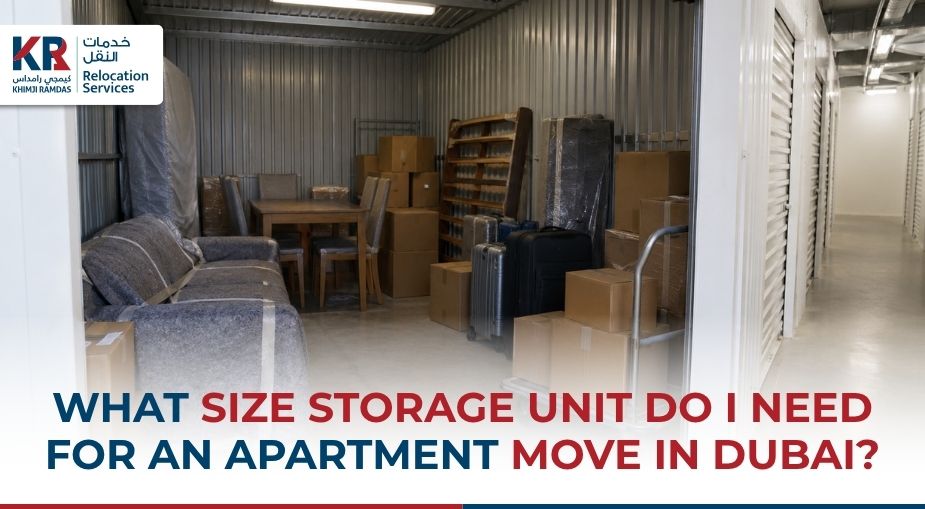
A storage unit can make an apartment move in Dubai much easier when your new home is not ready, your furniture does not all fit, or you need time to decide what to keep. The difficult part is choosing enough space for your belongings without paying for unused capacity.
This guide explains how to estimate the right storage unit from your apartment size, furniture volume, number of boxes, storage duration, and access needs, especially when moving to Dubai and arranging your belongings for a smooth transition.
You will also learn when moving and storage should be planned together, when climate-controlled storage may be worth considering, and how Khimji Ramdas Relocation Services can help you compare suitable options.
How to Estimate the Right Storage Unit for an Apartment Move
The most reliable estimate starts with the volume and shape of your belongings, not simply the number of bedrooms. Two one-bedroom apartments can require very different storage space: one may contain only essential furniture, while the other may include large sofas, wardrobes, appliances, bicycles and many packed cartons.
When planning to rent a storage unit, begin with a complete inventory. Separate large furniture, appliances, fragile items, seasonal belongings, boxes and items that may need regular access. Measure unusual or bulky pieces where possible, especially corner sofas, tall wardrobes, dining tables and exercise equipment.
Use Apartment Size as a Starting Point
When choosing a storage unit, consider this point: Apartment size can provide an initial guide, but it should not be treated as a quotation or a guaranteed space requirement.
A compact studio with a bed, sofa, small dining set and boxes may need considerably less space than a heavily furnished two-bedroom apartment.
As a broad planning approach, consider the following:
- A studio or compact one-bedroom apartment often contains one bedroom set, a small living area, basic appliances and a modest number of cartons.
- A larger one-bedroom or two-bedroom apartment may include several wardrobes, a dining set, additional seating, appliances, children’s items and more packed boxes.
- A three-bedroom apartment or villa contents usually require a detailed survey because furniture dimensions, storage height and access arrangements can significantly affect the estimate.
For the right storage unit, consider this issue early: These categories are only starting points. A professional assessment is particularly useful when you are storing a fully furnished home rather than a selected group of possessions.
Estimate by Furniture Volume and Box Count
Large items determine how efficiently the unit can be packed. A room full of dismantled furniture and uniform cartons may use space more effectively than the same room’s contents left assembled. At the same time, fragile items need protection and should not be compressed simply to reduce the footprint.
When choosing a storage unit, consider this point: Make a room-by-room list of furniture and estimate the number of cartons. Include items often forgotten during early planning, such as lamps, mirrors, rugs, kitchen equipment, children’s toys, balcony furniture and filing boxes.
If you are using apartment movers, ask whether they can complete a pre-move survey or help identify items that should be dismantled before storage.
The number of boxes matters because cartons need safe stacking. A high box count does not automatically mean you need a larger unit if the cartons are uniform and properly packed, but mixed box sizes can leave unusable gaps.
Heavy cartons should remain low, while fragile or frequently needed items should be positioned where they can be reached safely.
Storage Unit Sizes: Matching Space to Your Belongings
Once you have an inventory, the next step is to compare the space you need with how the unit will actually be packed.
A storage unit is not just an empty room. Safe loading requires walkways, protection around fragile goods and enough room to remove items without unloading everything in front of them.
Think in Zones Rather Than One Large Pile
When comparing storage unit options, keep this practical detail in mind: Divide your belongings into practical zones: large furniture, cartons, fragile goods and access items. Large furniture normally forms the base or perimeter.
Cartons can be stacked in stable groups, while fragile items should be protected from pressure and placed where they will not be knocked when other goods are removed.
If you expect to access the unit only once at the end of the storage period, a tighter layout may be practical.
If you will collect documents, clothing, business stock or children’s belongings during the move, the layout must include a usable access path. That can increase the space required even when the stored inventory stays the same.
Choose a Unit Based on Your Storage Period
Before booking a storage unit, confirm this requirement: The duration of storage changes how you should plan. For a short transition between homes, you may store almost everything together and retrieve it soon after delivery.
For several months or longer, you may want a more deliberate layout, better labelling and easier access to seasonal or valuable items.
A practical long-term arrangement places items you are unlikely to need towards the back, while items needed during the transition remain near the entrance. Leave labels facing outwards and keep a simple inventory showing where key cartons are located. This avoids opening multiple boxes when you need one item.
The storage unit plan should allow for this detail. Short-term storage can also become longer than expected if a handover changes, renovation work takes longer, or a new lease is delayed.
Avoid choosing a unit that is only just large enough if one extra sofa, appliance or batch of cartons could make the arrangement unsafe.
Allow for Disassembly and Protection
Before booking a storage unit, confirm this requirement: Beds, dining tables, wardrobes and some shelving may be dismantled before storage. This can reduce the volume, but it also creates separate panels, fittings and hardware that must be labelled and protected.
Keep screws and small parts in marked bags attached to the relevant furniture, rather than placing them loose in a general carton.
Protective wrapping can add volume. Blankets, cartons, corner protection and wrapping around upholstered furniture all take space, but they reduce the risk of scratches, dust and handling damage. The right storage estimate accounts for the protected condition of the goods, not only their bare dimensions.

Tell us about your move and get a personalized quote based on your requirements.
What Affects Storage Unit Cost in Dubai?
Storage unit cost is influenced by more than the floor area. The final price may depend on the amount stored, the storage period, access arrangements, handling requirements, protection, collection or delivery services and the type of storage environment. Exact costs should be confirmed for your individual inventory and service scope.
Storage Duration and Flexibility
A longer storage period may change the overall value of different options, but the lowest monthly figure is not always the lowest practical cost. A cheaper unit that requires repeated transport, difficult access or a second move may create extra expense and inconvenience.
Ask how changes in the storage period are handled. If your move-out date or new-home handover is uncertain, confirm whether the arrangement can be extended and what notice may be needed. Requirements and terms can vary, so they should be reviewed before booking.
Access Requirements
A storage unit should be chosen with this in mind. Access is one of the most important differences between storage options.
If you need regular access, consider how often you will visit, whether you need one carton or a large item, and whether a vehicle can load conveniently. A compact unit may appear adequate but become impractical if every visit requires moving several layers of furniture.
To size a storage unit correctly, account for this point: If you are storing household goods for a fixed transition period and do not expect to visit, a managed moving and storage arrangement may be simpler.
The goods can be collected, protected, stored and later delivered as part of a coordinated plan. This can reduce handling by the customer, although the right option depends on your timing, access needs and service requirements.
Collection, Delivery and Handling
Moving storage may involve more than the storage space itself. You may need packing, dismantling, collection from an apartment, delivery to storage and final delivery to a new address.
In Dubai apartment buildings, lift bookings, loading bays, parking restrictions and building access can affect the moving plan even when the storage unit is suitable.
Khimji Ramdas Relocation Services can help coordinate storage with local moving requirements where the services match your situation. Asking for the storage and transport elements to be considered together can make the quotation easier to understand and reduce the risk of arranging separate services that do not align.
Compare the Total Arrangement, Not Only the Monthly Figure
When comparing storage unit cost, check what is included and what is charged separately. Important points may include collection, delivery, packing materials, handling, access, insurance or valuation arrangements, and any minimum period or notice conditions. For a residential move in UAE, understanding these details can make the transition less stressful, especially when your new home is not ready to receive all your belongings. Do not assume that two apparently similar storage offers provide the same service.
A useful comparison asks four questions: how much space is allocated, how are your goods protected, how will you access them, and what happens when you want them delivered? Clear answers provide greater peace of mind than a low headline price that does not reflect your actual moving and storage needs.

Discuss your moving requirements with our team and find the right support for your move.
When Is Climate Controlled Storage Worth Considering?
For a storage unit decision, keep this detail in view: Climate controlled storage can be relevant when the condition of your belongings may be affected by temperature, humidity or environmental fluctuations.
Dubai’s climate makes this an important question for some household goods, although the right requirement depends on the item, packaging, storage period and facility conditions.
Items That May Need Extra Environmental Protection
Consider discussing climate controlled storage for belongings that are sensitive to heat or moisture, such as certain wooden furniture, musical instruments, artwork, photographs, documents, electronics, leather goods and delicate collections. This does not mean every item automatically requires climate control, and professional advice should be based on the actual goods.
To size a storage unit correctly, account for this point: Furniture made from wood, leather or composite materials can be more sensitive to prolonged environmental changes than ordinary plastic household items.
Fine art, antiques and valuable personal collections may also require a more specific packing and storage assessment rather than a standard household-goods approach.
Duration, Packaging and Condition Matter
The longer items remain stored, the more important it is to consider their condition before packing. Do not place damp textiles, wet equipment or recently cleaned items into sealed packaging without allowing them to dry properly. Record existing marks and photograph valuable or delicate pieces before they are wrapped.
Keep this in mind before selecting a storage unit. Good packing still matters even when environmental controls are available.
Use suitable materials, avoid over-tight wrapping around items that need ventilation, and keep cartons raised or protected according to the storage provider’s guidance. Climate controlled storage supports preservation; it does not replace careful preparation.
Ask Specific Questions Before Booking
If climate control matters to you, ask what environmental conditions are managed, which goods the option is intended for, how items are wrapped and whether there are any limitations.
Also ask how fragile, high-value or specialist items are assessed. Requirements can vary by facility and by the contents of the shipment.
When choosing a storage unit, consider this point: For a normal apartment move, a detailed inventory is usually the best starting point. It helps distinguish everyday household goods from items that justify additional protection and prevents you from paying for features that do not benefit the belongings you are storing.
Our moving experts are here to assist you.
How to Plan Moving and Storage Together in Dubai
A practical storage unit choice should account for this point. Storage is easiest when it is built into the moving plan from the beginning. Leaving the decision until moving day can result in rushed packing, unclear box labels, unsuitable unit sizing and extra handling.
A coordinated plan is especially important when you are moving between apartments, waiting for a handover or reducing the contents before settling into a new home.
Prepare Before the Apartment Move
When comparing storage unit options, keep this practical detail in mind: Start by dividing belongings into four groups: take to the new home, place in storage, donate or sell, and dispose of responsibly.
This prevents you from paying to move and store items you no longer want. It also gives apartment movers a clearer inventory for planning labour, vehicle space and packing materials.
Measure large furniture and identify items that cannot be dismantled easily. Check whether the building requires advance booking for lifts, loading areas or move-in and move-out times. Building procedures vary, so confirm them with your building management or landlord rather than relying on assumptions.
For a storage unit decision, keep this detail in view: The smooth moving checklist can help organise key tasks, including sorting, packing, access planning and move-day preparation.
Use it alongside your storage inventory so that the items going into storage are clearly separated from those travelling directly to your new apartment.
Pack and Label for Retrieval
Use a consistent labelling system. Include the room, a short description and a priority such as “open first”, “seasonal” or “long-term”. Keep a digital inventory with carton numbers and photographs of valuable or fragile items.
Avoid placing essential documents, medicines, passports, daily clothing or items required immediately after arrival into deep storage. If these items must be stored temporarily, keep them in clearly marked access cartons and tell the moving team where they are located.
Decide Whether Self-Access or Managed Storage Fits
This can change the storage unit space you need. Self-access may suit people who expect to visit regularly and want direct control over individual items.
Managed storage may be more suitable when the goods are stored for a defined period and the customer wants collection and later delivery coordinated by a relocation provider.
Neither option is automatically better. The decision depends on how often you need access, how much handling you want to manage, whether your apartment has difficult loading conditions and how certain your final delivery date is. Explain these details when requesting a storage assessment.
Khimji Ramdas Relocation Services can discuss storage alongside [Local Moving Services](https://khimjisrelocations.ae/local-moving-services/) when your move involves collection from one Dubai apartment and later delivery to another address. The appropriate arrangement should be based on your inventory, access requirements and confirmed service scope.
How to Get a More Accurate Storage Recommendation
The best way to avoid choosing an unsuitable storage unit is to provide accurate information before receiving a quotation. A storage specialist can make a more useful recommendation when they understand not only how much you own, but also how you intend to use the storage space.
Information to Prepare
Before you enquire, gather the following details:
- Apartment type, approximate size and number of rooms.
- A room-by-room furniture list, including dimensions for unusually large items.
- Estimated carton quantity and the number of fragile, valuable or specialist items.
- Expected storage duration, likely access frequency and preferred collection or delivery dates.
- Building access information, including stairs, lift restrictions, loading areas and parking considerations where known.
Photographs or a short video can also help communicate volume, particularly when furniture is already packed or stored in several rooms. Be honest about items that may be added later; an estimate based on incomplete information can lead to avoidable changes.
What to Confirm in the Enquiry
When comparing storage unit options, keep this practical detail in mind: Ask whether the recommendation includes packing, dismantling, collection, storage, access and final delivery, or whether these are separate services.
Confirm how the storage period is calculated and what happens if your move is delayed. If you need climate controlled storage, identify which belongings require it rather than requesting it without explaining why.
Also ask how fragile goods, upholstered furniture, electronics, documents and high-value items should be prepared. Requirements may vary by item and by the storage arrangement, so the provider should explain the practical limitations before you commit.
Avoid the Most Common Sizing Mistakes
This is an important storage unit consideration. The most common mistake is choosing a unit based only on bedroom count. Other frequent problems include underestimating balcony and kitchen contents, forgetting protective materials, leaving furniture assembled when it could be dismantled, and failing to allow access space.
Another mistake is storing goods without a retrieval plan. If you expect to access the unit, tell the provider before the space is selected. A unit that works for sealed, long-term storage may be frustrating for regular visits.
Enquire With Khimji Ramdas Relocation Services
Khimji Ramdas Relocation Services can help you review the volume of your apartment contents and discuss storage arrangements in the context of your move. The most useful enquiry includes your inventory, storage duration, access expectations and destination plans.
Rather than choosing the smallest available option, aim for a solution that protects the goods, supports safe handling and remains practical if your plans change slightly. The final recommendation and storage unit cost should be confirmed after the service requirements and inventory have been assessed.
Wrapping Up
Choosing a storage unit for an apartment move in Dubai is mainly a question of volume, packing method, storage duration and access. Apartment size offers a starting point, but furniture dimensions, carton quantity, protective materials and the way you plan to retrieve items provide a more reliable estimate.
Compare the complete moving and storage arrangement rather than focusing only on a monthly figure. Consider collection, delivery, handling, access, environmental requirements and the possibility that your storage period may change.
If your belongings include sensitive furniture, documents, artwork, electronics or other delicate goods, ask whether climate controlled storage or additional protection is appropriate.
When you are ready to rent a storage unit, prepare a clear inventory and explain your apartment access, timing and delivery needs.
Khimji Ramdas Relocation Services can help you assess suitable storage options and coordinate relevant local moving support, so your next step is based on the contents you actually need to store rather than a guess.


FAQs About Choosing a Storage Unit for an Apartment Move in Dubai
How do I choose the right storage unit for an apartment move in Dubai?
List your furniture, appliances, carton count and fragile items, then consider how often you need access. Apartment size is only a starting point; a detailed inventory gives a more reliable recommendation.
Can I rent a storage unit based only on the number of bedrooms?
You can use bedrooms for an initial estimate, but it is not precise. Furniture size, box quantity, dismantling, protective wrapping and access space can make two similarly sized apartments need different storage capacities.
What affects storage unit cost in Dubai?
Storage unit cost may depend on space, duration, access, packing, collection, delivery, handling and environmental requirements. Confirm which services are included because pricing and terms vary by provider and situation.
Is climate controlled storage necessary for household belongings?
Not always. It may be worth considering for certain wooden or leather furniture, electronics, documents, artwork, instruments and collections. The right choice depends on the item, packaging, condition and storage duration.
Should I use moving and storage services together?
Before booking a storage unit, confirm this requirement: Combining moving and storage can simplify collection, packing, protection and later delivery, especially during a delayed handover. It may not be necessary if you need frequent independent access, so compare both arrangements.
How can apartment movers help prepare goods for storage?
Apartment movers can help with packing, dismantling, protection, inventory preparation, collection and delivery where included in the agreed service. Building access, lift bookings and loading conditions should be discussed in advance.
How can Khimji Ramdas Relocation Services help me select storage?
Khimji Ramdas Relocation Services can review your inventory, storage duration, access needs and delivery plan to discuss suitable options. The final space, cost and service scope should be confirmed for your circumstances.
Explore Our Most Relevant Articles
With a dedicated single point of contact offering comprehensive, tailored solutions, streamlined processes, and a network of suppliers, we ensure a superior relocation experience. Our commitment to excellence ensures that every aspect of the relocation process is efficiently managed, delivering satisfaction to our clients.
Pet Passport Requirements for Moving from Dubai to the UK
Understand pet passport requirements for moving from Dubai to the UK, including microchipping, vaccinations, health certificates, carriers and arrival planning.

Office Moving Costs in Dubai: The Budget Beyond the Mover’s Quote
Understand office moving costs in Dubai, including furniture, packing, IT relocation, access, storage and insurance, before requesting a tailored quote.

Freight Forwarder vs Relocation Company: Key Differences
Compare a freight forwarder and a relocation company for international moves, including packing, customs, delivery, coordination and household moving support.