Tenancy Contract Dubai: Key Clauses to Check Before Moving In
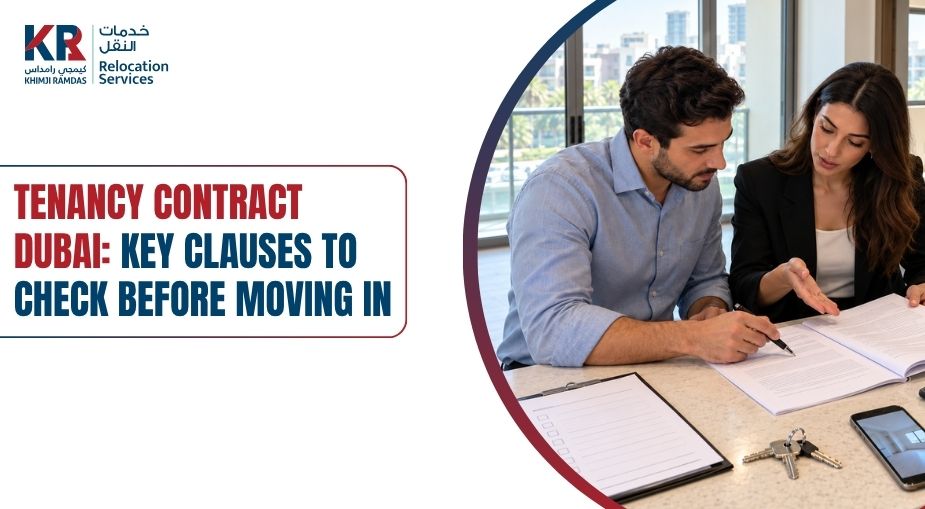
A tenancy contract Dubai renters can understand before signing is one of the best protections against avoidable disputes, unexpected costs and moving-day delays.
Whether you are renting a studio in Jumeirah, a villa in Arabian Ranches or an apartment in Business Bay, the contract should match the home, the agreed deal and the responsibilities discussed with the landlord or agent.
A careful review does more than confirm the rent. This guide explains the clauses that deserve attention, distinguishes Dubai legal requirements from common contract practices, highlights realistic red flags and shows how to connect your tenancy paperwork with a well-planned move-in.
It also explains when professional home movers in Dubai can make the practical handover easier.
Understanding What a Tenancy Contract in Dubai Should Confirm
The tenancy contract Dubai renters sign is not simply a receipt for rent. It records the parties, property, financial terms and obligations that will guide the tenancy. Before signing, compare every contract detail with the property you viewed and the terms you negotiated.
Check the Parties, Property and Ejari Details
For the tenancy contract Dubai landlords issue, the contract should identify the landlord and tenant accurately and describe the rented property clearly. Check the building name, unit or villa number, parking spaces, storage areas, access cards and any included facilities.
If the landlord is represented by an agent, ask whether the agent is authorised to act for the owner and sign on the owner’s behalf.
Names, passport or Emirates ID details, contact information and ownership or authorisation information should be consistent across the documents provided to you. A mismatch does not automatically mean the arrangement is invalid, but it is a reason to pause and request clarification before transferring money.
For the tenancy contract Dubai landlords issue, Dubai tenancy contracts are commonly registered through Ejari, the system associated with the Dubai Land Department. Registration helps create an official record of the rental relationship and may be needed for services or dispute-related processes.
The exact documents and process can depend on the parties and the transaction, so confirm current requirements through official Dubai Land Department channels or an authorised service provider.
Compare the Contract With the Property You Saw
Before signing the tenancy contract Dubai tenants are offered, a frequent practical problem arises when the contract describes a furnished apartment but does not include an inventory, or when a promised parking space is mentioned only in messages.
Put important promises in the contract or an attached schedule rather than relying on informal conversations.
Check whether the agreement covers furniture, appliances, curtains, fixtures, parking, chiller or cooling arrangements, internet equipment and any storage area. If something is excluded, state that clearly. The more precisely the rented premises are described, the easier it is to determine what should be present at handover.
Distinguish Law From Contract Practice
For the tenancy contract Dubai landlords issue, Dubai tenancy rules come from legislation, regulations and official processes, while many day-to-day terms are agreed between the parties.
For example, registration through Ejari is an official administrative step, whereas the precise format of an inventory, the timing of a professional cleaning service or responsibility for a particular appliance may be contractual matters.
For the tenancy contract Dubai landlords issue, do not assume that a clause is enforceable merely because it appears in a standard template.
If a clause conflicts with applicable Dubai tenancy legislation or attempts to remove a right that the law protects, obtain qualified legal advice before relying on it.
A relocation company can help you plan the practical move, but it cannot replace legal advice or decide how a tenancy dispute will be determined.
Financial Clauses to Check Before Signing a Dubai Tenancy Contract
Financial terms are where small wording differences can create significant pressure later. Read the rent, payment schedule and deposit provisions together rather than reviewing each figure in isolation. Ask for a written explanation of any amount that is not clearly identified.
Rent, Cheques and Payment Dates
In the tenancy contract Dubai renters sign, the contract should state the total annual rent, the number and value of instalments, payment dates and the method of payment.
If rent is paid by cheques, confirm the dates and payee details before issuing them. If payment is made by bank transfer, retain the agreed account information and evidence of payment.
When checking a tenancy contract Dubai renters may be given, check whether the contract includes separate charges for parking, utilities, cooling, internet, access cards, maintenance, agency services or community-related costs.
Some charges may be payable to a landlord, building operator or utility provider rather than forming part of the rent. The contract should make that distinction understandable.
A practical red flag is a contract that shows one rent amount while messages or a side agreement refer to another. Another is a demand for payment to an account belonging to an unrelated individual without a clear explanation. Resolve discrepancies in writing before signing or transferring funds.
Rent Increases and Renewal Discussions
For a tenancy contract Dubai tenants can review with confidence, Dubai rent increases are subject to applicable rules and official mechanisms, including the framework associated with the Dubai Land Department and RERA.
Whether an increase is permitted can depend on factors such as the existing rent, the area’s rental level, the relevant calculation and the notice given. Do not treat a generic clause saying “rent may increase on renewal” as a complete answer.
In the tenancy contract Dubai renters sign, for a proposed increase, ask how it was calculated and check the current official guidance or rental calculator where relevant.
A contract cannot by itself guarantee that any future increase will be accepted without regard to applicable rules. Equally, tenants should not assume that every renewal will remain at the original rent.
Security Deposit and Other Upfront Amounts
The contract should state the security deposit amount, what it secures and how deductions will be assessed. In Dubai, a security deposit is commonly requested, but the amount and treatment should be agreed clearly.
The deposit is generally intended to cover matters such as unpaid sums or damage beyond reasonable wear and tear, subject to the contract and applicable law.
In the tenancy contract Dubai renters sign, ask how the deposit will be returned, who will inspect the property and whether deductions will be supported by an explanation or evidence.
“All damages” is too broad to be a useful standard. Ordinary ageing from normal occupation should be distinguished from avoidable damage, missing items or unauthorised alterations.
Before signing the tenancy contract Dubai tenants are offered, keep the payment receipt and the signed contract. At the end of the tenancy, photographs, the handover record and evidence that accounts were settled can help establish the property’s condition and the parties’ understanding.
A Simple Financial Review
Before signing, write down the full first-year cost, not just the advertised rent. Include the deposit, agency fee if applicable, registration-related charges, utility deposits, moving costs and any furnishing or repair expenses you will incur.
This helps you compare apartments accurately and prevents the move-in budget from being consumed by overlooked charges.
Maintenance, Repairs and Condition at Move-In
For the tenancy contract Dubai landlords issue, maintenance clauses often look harmless until an air-conditioning fault, water leak or appliance failure occurs. The contract should explain how repairs are reported, who handles them and which categories of work are the tenant’s responsibility.
Landlord and Tenant Responsibilities
Dubai tenancy law generally places responsibility for maintaining the property and making it suitable for use on the landlord, unless the contract provides otherwise for particular obligations.
Tenants are normally expected to use the property properly, report problems promptly and handle damage caused by their misuse or negligence. Minor repairs and consumables are frequently allocated by contract, so read the wording rather than relying on assumptions.
When checking a tenancy contract Dubai renters may be given, look for specific treatment of air-conditioning, plumbing, electrical faults, water heaters, built-in appliances, sanitary fittings, pest issues and damage to walls or flooring.
A clause that makes the tenant responsible for every repair, regardless of cause or cost, deserves careful review and potentially professional legal advice.
The reporting procedure also matters. Identify the approved email address, portal, telephone number or property manager. If a repair is urgent, record the time reported and preserve photographs, videos and messages. Good records help both sides distinguish a pre-existing defect from a later incident.
The Move-In Inspection and Inventory
In the tenancy contract Dubai renters sign, do not treat key collection as a quick formality.
Before bringing furniture into the home, inspect every room and compare the condition with the inventory or handover form. Photograph existing marks, stains, cracks, damaged doors, loose fittings, appliance faults, meter readings and missing items.
Within a tenancy contract Dubai renters rely on, for a furnished property, record the make or description and condition of significant items.
For an unfurnished property, inspect floors, paintwork, windows, balconies, wardrobes, kitchen fittings and bathrooms. Date the photographs and send them to the landlord or agent with a short written summary requesting confirmation.
This step is especially important when several parties are involved. A landlord may use a property manager, building management may control access, and the tenant may instruct movers. A signed handover record creates a common starting point before belongings are delivered.
Cleaning, Alterations and Access
In the tenancy contract Dubai renters sign, clarify whether the property will be professionally cleaned, repainted, treated for pests or repaired before occupation. State what must be completed and by when.
If work is still outstanding, do not assume that a verbal promise will automatically delay rent or change your obligations; obtain written advice before taking action.
For a tenancy contract Dubai tenants can review with confidence, the contract should also address painting, drilling, fixtures, satellite equipment, smart locks, partitioning and other alterations.
Ask how access for inspections or repairs will be arranged. Landlords and building representatives may need reasonable access for legitimate purposes, but the practical notice and coordination process should be clear and consistent with applicable law.
Why This Affects Your Moving Plan
A move can be disrupted by a missing access card, an uncompleted repair, a lift-booking rule or a landlord who has not released the keys. Confirm the handover date, access arrangements, loading bay instructions and building requirements before booking a vehicle.
Within a tenancy contract Dubai renters rely on, if you are coordinating furniture, appliances or delicate belongings, [Local Moving Services](https://khimjisrelocations.ae/local-moving-services) from Khimji Ramdas Relocation Services can support the moving-day preparation once the property’s access and handover arrangements are confirmed.
The practical principle is simple: do not schedule the delivery around an assumed handover; schedule it around a documented one.
Renewal, Termination and Notice Periods in Dubai
Before signing the tenancy contract Dubai tenants are offered, a contract’s end date does not answer every question about renewal or early termination.
Review the notice, renewal and termination clauses as soon as you receive the draft, particularly if your employment, visa, family plans or property purchase may change.
Renewal and Rent Review
Check the contract expiry date, the renewal procedure and the method for communicating revised terms.
A tenant who waits until the final weeks may have less time to negotiate, search for another home or arrange movers in Dubai. Put important discussions in writing and retain evidence of when notices were sent and received.
When reviewing the tenancy contract Dubai residents receive, for changes to rent or other material terms, check the applicable Dubai rules and required notice. RERA-related guidance and official calculators may be relevant, but the outcome can depend on the property and circumstances.
A clause that says the landlord can change any term at any time should not be treated as a complete statement of the legal position.
Tenant Notice and Early Termination
For the tenancy contract Dubai landlords issue, the tenant’s notice requirement is primarily determined by the contract, subject to applicable law.
Some agreements require a specified notice period before expiry; others include an early termination clause with conditions such as a notice period, compensation or proof of a particular event. Read the exact wording before assuming that leaving early ends your financial obligations.
Within a tenancy contract Dubai renters rely on, if there is no clear early termination clause, negotiate a written surrender agreement rather than relying on a telephone conversation.
It should state the agreed move-out date, rent and utility treatment, inspection arrangements, key return, deposit process and whether any compensation is due. A moving company in Dubai can organise the physical move, but it cannot cancel the lease or release a tenant from contractual obligations.
Landlord Notices and Eviction Grounds
Before signing the tenancy contract Dubai tenants are offered, Dubai law provides specific rules for certain landlord notices, including a commonly relevant 12-month notice served through the legally recognised method for specified reasons such as sale, personal use or major works.
The precise requirements and permitted grounds matter; a casual message or an informal request to leave should not automatically be treated as a valid statutory notice.
For a tenancy contract Dubai tenants can review with confidence, because notice disputes can turn on dates, delivery method, wording and the reason given, obtain advice from the Dubai Land Department, the Rental Disputes Centre or a qualified UAE lawyer when the issue is contested.
Khimji Ramdas Relocation Services can help coordinate a move after a lawful and agreed date is established, but it does not control landlord decisions, official notices or dispute outcomes.
Red Flags in Termination Clauses
Before signing the tenancy contract Dubai tenants are offered, be cautious when a contract gives one party unlimited power to end the tenancy immediately, imposes an unclear penalty for any early departure or requires the tenant to surrender the entire deposit without describing a legitimate basis.
Ask for definitions, dates and a fair process for inspection and settlement.
When checking a tenancy contract Dubai renters may be given, a realistic example is a tenant who signs a clause requiring three months’ rent for early exit, then discovers that the landlord also expects rent until a replacement tenant is found.
The two provisions may overlap or conflict. Before signing, ask the agent to confirm in writing exactly how the charge operates and seek legal advice if the wording remains ambiguous.
Preparing to Move In After Signing
When checking a tenancy contract Dubai renters may be given, signing the agreement is only one part of moving into a Dubai property.
The final stage is a controlled handover that connects the legal document with the physical condition of the home, the building’s procedures and your household’s arrival.
Create a Handover File
Keep one digital folder containing the signed tenancy contract, Ejari record when available, payment evidence, deposit receipt, inventory, photographs, landlord and agent contacts, building instructions and maintenance reporting details. Store it somewhere accessible even while your belongings are in transit.
When checking a tenancy contract Dubai renters may be given, before moving day, confirm the key collection appointment, parking or loading access, lift booking, security registration, access cards and any move-in timing restrictions.
Requirements differ between buildings and communities, so ask the building management rather than assuming that the landlord’s permission is sufficient.
Match the Move to the Property’s Readiness
In the tenancy contract Dubai renters sign, a home may be legally available but not practically ready. Check that agreed repairs are complete, utilities can be connected, access cards work and essential fixtures are present.
If the handover is delayed, contact the landlord or agent promptly and document the effect on your arrangements.
For families, plan the first-night essentials separately from the main shipment: medication, documents, chargers, school items, basic kitchenware and clothing. For furnished properties, confirm the inventory before movers place additional furniture, since it is harder to identify missing or damaged items after rooms become crowded.
What Experienced Home Movers Look For
Before signing the tenancy contract Dubai tenants are offered, professional movers focus on more than carrying boxes. They need accurate access information, lift dimensions, parking instructions, stairway details and clear identification of fragile or high-value items.
In apartment buildings, a small error in the loading plan can cause waiting time or force a change in the delivery sequence.
Give the moving team the confirmed address, building contact and handover timing only after checking them. Keep passports, tenancy documents, valuables and essential medicines with you rather than placing them in the general shipment.
If the property is not ready, pause the delivery rather than leaving belongings in an uncontrolled location.
When to Ask for Specialist Advice
Before signing the tenancy contract Dubai tenants are offered, ask a qualified legal adviser about disputed notices, unclear liability, substantial proposed rent changes, deposit conflicts or clauses that appear inconsistent with applicable law.
Ask the relevant authority or building management about registration and access procedures. Use a relocation company for planning, packing, transport and coordination within the agreed service scope.
That division of responsibility protects you from a common mistake: expecting movers to solve a contractual problem or expecting a landlord to manage the logistics of a complex household move. Each issue is easier to resolve when the right party is involved early.
Wrapping Up
A tenancy contract Dubai renters can rely on should make the financial deal, property condition, maintenance duties, renewal process and exit arrangements understandable before money changes hands. Review the contract against the property, record the move-in condition and keep written evidence of payments, notices and agreed repairs.
Within a tenancy contract Dubai renters rely on, pay particular attention to clauses that are vague, unusually one-sided or inconsistent with what the landlord or agent told you.
Dubai-specific requirements can change with the situation, and official decisions depend on the facts, so verify current guidance through the Dubai Land Department, RERA, the Rental Disputes Centre or qualified legal counsel when necessary.
Once the tenancy terms and handover date are confirmed, plan the physical move with the same care. Khimji Ramdas Relocation Services can support the practical preparation through its Local Moving Services where that matches your needs, while you retain control of the contractual and legal decisions.
A documented handover and a realistic moving plan give you the strongest start in your new Dubai home.


FAQs -Tenancy Contract Dubai
What should I check first in a Tenancy Contract Dubai renters receive?
Check the parties, property details, rent, payment dates, deposit, Ejari information, maintenance duties, renewal terms, notice periods and move-in condition before signing.
Is Ejari registration required for every Dubai tenancy contract?
Dubai tenancy contracts are commonly registered through Ejari, but the current process and documents can vary. Confirm the applicable requirements with the Dubai Land Department or an authorised service provider.
How much security deposit can a landlord charge in Dubai?
The deposit is generally agreed in the contract, and the amount can vary by property and furnishing. Confirm the amount, permitted deductions and return process in writing before paying.
Who is responsible for repairs under a Dubai tenancy contract?
For the tenancy contract Dubai landlords issue, landlord and tenant responsibilities depend on applicable law and the contract. Major property maintenance is commonly the landlord’s responsibility, while minor repairs or tenant-caused damage may be allocated differently.
How much notice is needed to end a tenancy contract in Dubai?
For a tenancy contract Dubai tenants can review with confidence, the tenant’s notice period usually depends on the contract and applicable law. Landlord notices for specified eviction grounds follow separate legal requirements, so verify the dates and delivery method before acting.
Can I leave a Dubai tenancy contract early without paying compensation?
Not necessarily. Early termination depends on the contract, any agreed surrender terms and the circumstances. Obtain a written agreement covering the exit date, charges, rent, keys and deposit before moving.
When should I book home movers in Dubai after signing a tenancy contract?
Check the tenancy contract Dubai tenants sign for any handover or building-access obligations. Book movers after the handover date, access arrangements, lift booking and property readiness are confirmed. This reduces the risk of delivering belongings before keys, repairs or building permissions are available.
Explore Our Most Relevant Articles
With a dedicated single point of contact offering comprehensive, tailored solutions, streamlined processes, and a network of suppliers, we ensure a superior relocation experience. Our commitment to excellence ensures that every aspect of the relocation process is efficiently managed, delivering satisfaction to our clients.

Moving to Dubai Checklist: Documents, Housing and Shipping Guide
Use this moving to Dubai checklist to plan documents, housing, utilities, shipping, timelines and settling-in tasks while avoiding common relocation costs.
End-to-End Guide to Fine Art Exhibition Logistics in the UAE
Plan fine art exhibition logistics in the UAE with expert guidance on packing, condition reports, storage, transport, installation and return shipping.

Why Businesses Need Office Relocation Consultant for Big Moves
Learn how a relocation consultant coordinates office moves, IT, employees, vendors and continuity with support from Khimji Ramdas Relocation Services.